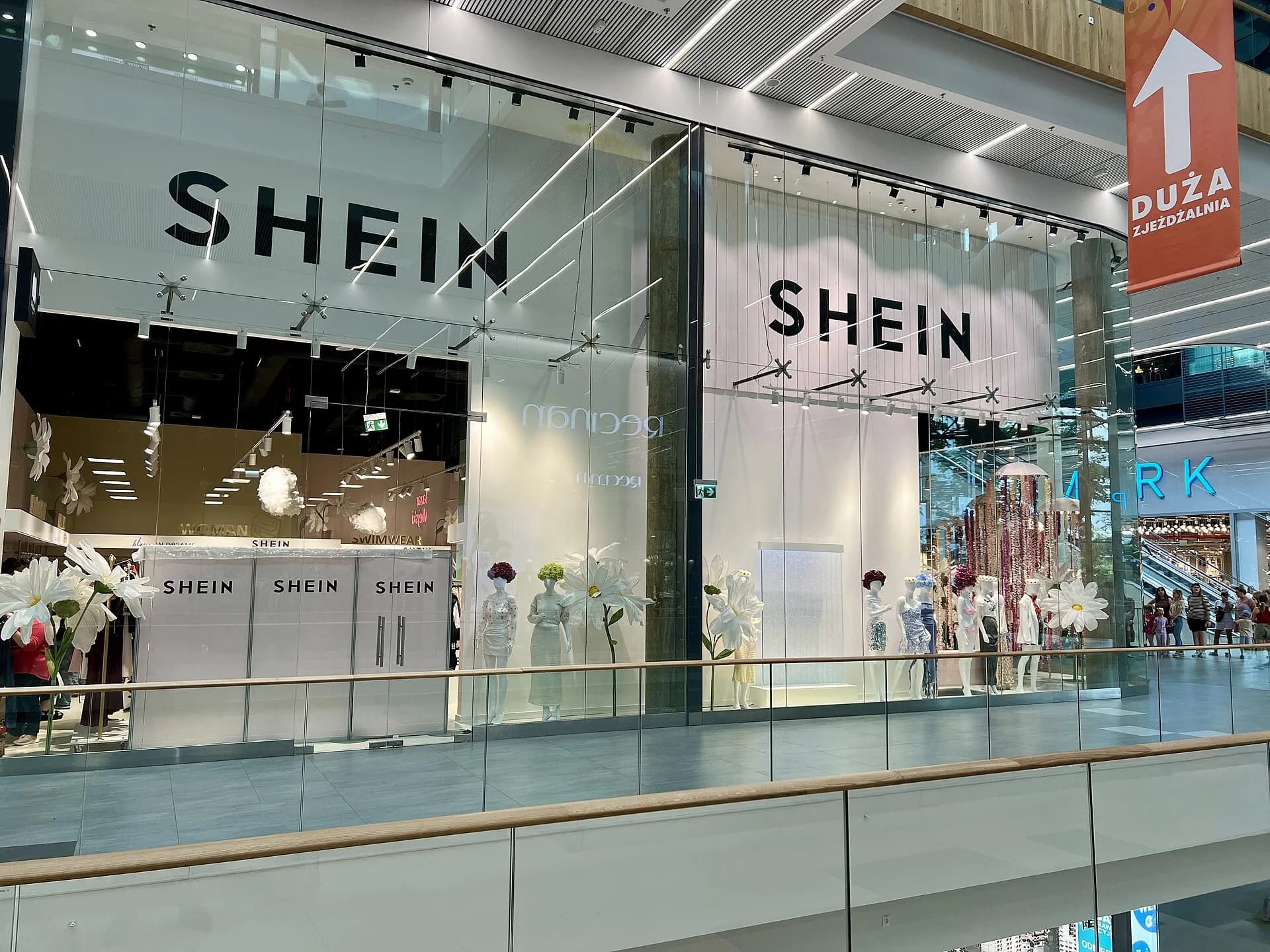
The first time most US retail planners took Temu seriously was somewhere between the 2023 and 2024 Super Bowls. By the time the second ad aired, the conversation had shifted from "novelty" to "what do we actually do about this." Eighteen months later, that question is still mostly unanswered.
The numbers tell part of the story. App download rankings, time-spent data from the usual third-party panels, and parcel volume coming in under the de minimis threshold all point in the same direction: Temu and Shein have collectively captured a meaningful share of US discretionary spending in categories that mid-market specialty and mass retailers consider core. Apparel basics, home accents, small electronics, seasonal decor, kids' toys under $20. The operators we spoke to in May and June were unanimous that something material has shifted in their lower-AOV traffic. They are less unanimous about what to do.
The de minimis question keeps coming up
Almost every conversation about Temu and Shein in 2024 eventually lands on Section 321 of the Tariff Act - the de minimis provision that lets shipments under $800 enter the US duty-free with minimal customs scrutiny. Both platforms have built operating models that lean heavily on direct-from-China fulfillment that qualifies. A head of supply chain at a home goods retailer put it this way: "We are competing against a tax structure, not just a price."
There has been legislative noise around tightening de minimis throughout 2024 - proposed bills, CBP enforcement signals, a steady drumbeat of trade-association lobbying. But as of mid-year, nothing has materially changed. Retailers planning H2 assortments are doing so under the assumption that the loophole holds at least through the election.
What's working (sort of)
The retailers we spoke to who feel least exposed share a few traits:
- Brand-led merchandising that doesn't compete on price discovery for commodity SKUs. If you're not on Temu's keyword auction, you're not directly in the fight.
- Loyalty programs with actual switching cost - credit cards, paid memberships, store credit that compounds. The operators with high-frequency loyalty mechanics report less leakage.
- Speed-of-fulfillment positioning. Temu's median delivery time has improved through 2024 but is still measured in days, not hours. Retailers leaning into same-day or next-day are using it as a wedge.
What is not working, based on the same conversations: trying to match Temu on price for commodity goods. Several mid-market players ran experiments in Q1 - aggressive markdowns on overlapping SKUs, paid search defenses against branded keywords. Nobody we spoke to felt the unit economics worked.
The advertising arms race
A separate dynamic worth flagging: Temu's US ad spend in 2023 and into 2024 was, by most third-party estimates, among the largest of any advertiser on Meta. That has driven CPM inflation across the platforms most DTC and mid-market retailers depend on. A growth marketing lead at a specialty apparel brand described it as "paying a Temu tax on every paid social impression, whether you sell anything they sell or not."
Whether Temu sustains that spend through H2 is an open question. There has been reporting suggesting the company is recalibrating - fewer Super Bowl-scale brand moments, more performance-oriented spend. If true, that would relieve some pressure on CPMs going into Q4.
What the second half looks like
Three things to watch:
The election outcome will shape the de minimis conversation more than any individual bill currently in committee. Both candidates have signaled interest in tightening, but the mechanics and timing differ.
Shein's IPO trajectory - repeatedly delayed, currently understood to be exploring London rather than New York - will affect how aggressively the company prices for growth versus margin.
And the question of whether US consumers' tolerance for the Temu/Shein quality-and-ethics tradeoff has a ceiling. There is anecdotal evidence in survey data that some cohorts are pulling back after disappointing orders. Whether that becomes a trend or stays anecdotal is the question every category manager we spoke to is trying to answer with their own data.
The honest summary from one operator: "We don't have a playbook. We have hypotheses and we're testing them while losing share."