Beauty was one of the first retail categories to get a real augmented-reality use case. Trying on a lipstick shade or a foundation match is a genuine problem that a camera and a model can help with, unlike most of the AR features bolted onto retail apps in the last decade. Nearly every major beauty retailer and a long list of brands now ship some version of virtual try-on or AI shade-matching. The technology works. The harder question, and the one that matters to a retail P&L, is where it actually changes behavior.
Two different tools that get lumped together
Virtual try-on and shade-matching are usually discussed as one thing. They are not.
Virtual try-on is a visualization tool. It renders a product, a lip color, an eyeshadow, a hair color, onto a live or uploaded image of the customer. Its job is to reduce the uncertainty of "what will this look like on me" for products where appearance is the whole decision.
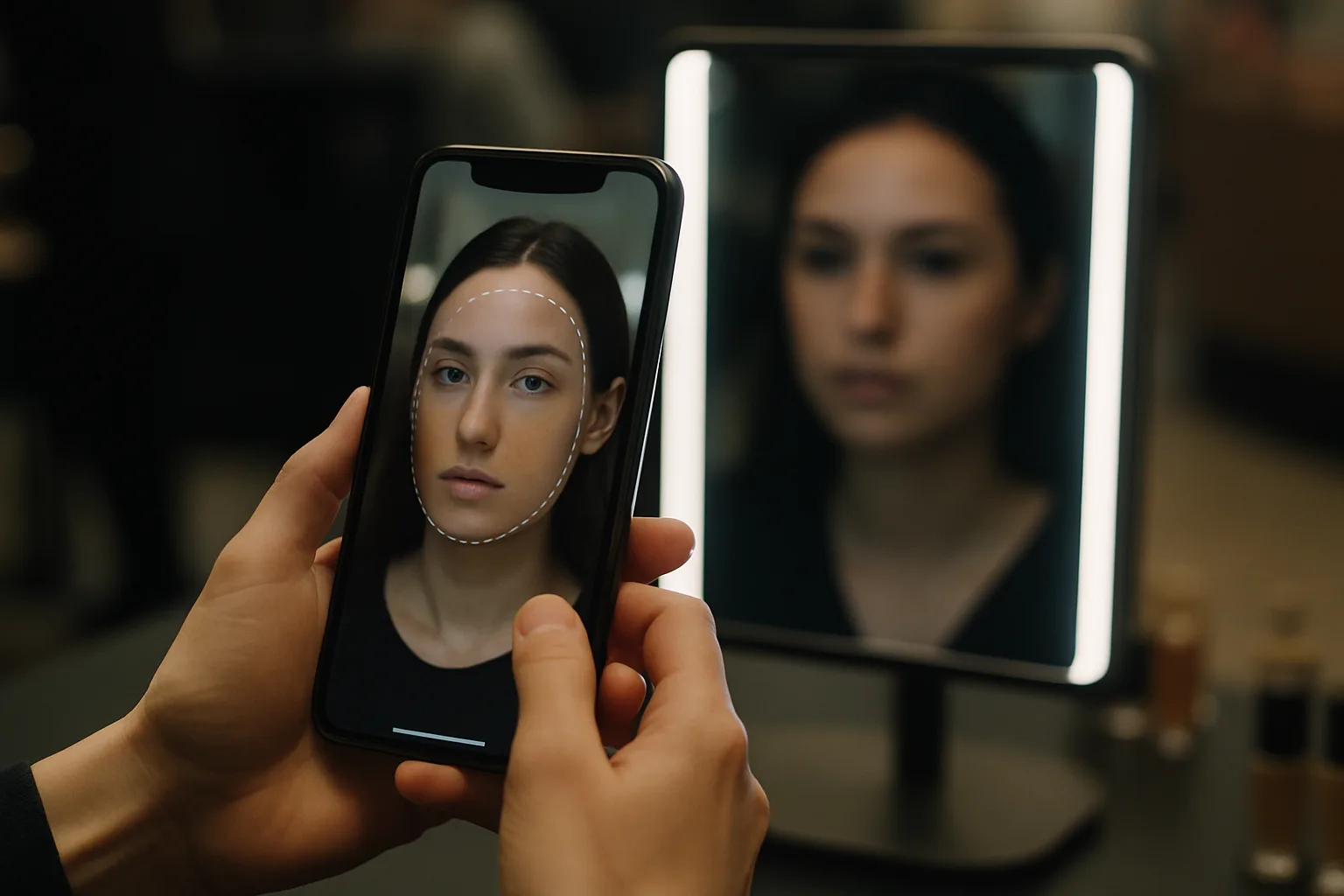
Shade-matching is a recommendation tool. It takes an input, a selfie, a quiz, a scan of the customer's current products, and outputs a specific SKU: this is your foundation shade, this is your undertone. Its job is to solve the single hardest conversion problem in beauty, which is that complexion products have dozens of shades and most customers do not know theirs.
These solve different problems and convert differently. Conflating them is why a lot of the reported results are muddy.
Where the numbers actually move
The category where AR earns its keep is complexion: foundation, concealer, and to a lesser extent tinted skincare. The reason is structural. Foundation has a high return rate driven almost entirely by wrong-shade purchases, and shade is exactly the variable a customer cannot judge from a product page. A shade finder that gets the match right removes both the friction that kills the sale and the mismatch that drives the return.
Retailers that have deployed shade-matching seriously report the effect showing up in two places: a lift in conversion on complexion SKUs, and a reduction in return rates on those same SKUs. The return-rate effect is the one that matters most to the economics, because beauty returns are expensive and complexion returns are frequently unsellable once opened. Taking even a few points off the return rate on a high-volume foundation line is real margin.
Color cosmetics that are not complexion, lipstick, eyeshadow, blush, convert less dramatically from try-on. These are lower-consideration, lower-return, often impulse purchases. Try-on adds engagement and a bit of confidence, but the uncertainty it removes was not blocking many sales to begin with. The feature is pleasant. It is not decisive.
Where it is theater
Skincare is where the AI beauty tools get least honest. "AI skin analysis" that scans a selfie and diagnoses pores, wrinkles, and hydration to recommend a regimen is largely a merchandising device dressed as diagnostics. The camera cannot measure most of what these tools claim to measure, and the recommendation is steered toward the products the retailer wants to sell. It engages customers and it moves product, but presenting it as clinical assessment is a credibility risk the category keeps taking anyway.
The other piece of theater is virtual try-on deployed as a marketing gimmick, a filter for social engagement, with no connection to the actual purchase funnel. Fun, shareable, and irrelevant to conversion.
The operational catch
The part that gets underestimated is the data and content cost of doing this well. A shade finder is only as good as the shade data behind it, and complexion shade ranges are notoriously inconsistent between brands. A try-on renderer needs accurate color and finish data for every SKU, kept current as products change. Retailers that treated AR as a front-end feature, bolted on and left alone, got demos. Retailers that treated it as a data problem, investing in the product and shade metadata that feeds it, got the conversion and return numbers.
This is the same lesson that shows up everywhere AI touches retail. The model is the easy part. The proprietary, well-maintained data underneath it is the moat and the cost.
What to watch
The signal worth watching is whether shade-matching moves from a website feature to a merchandising standard, in-store as well as online, integrated into how the category is assorted and how returns are managed. That is where the value is, and it is a supply-and-data problem more than an AI problem. The retailers walking a beauty trade floor asking manufacturers for structured shade and finish data, rather than asking software vendors for a flashier try-on, are the ones who understand which half of this actually pays.