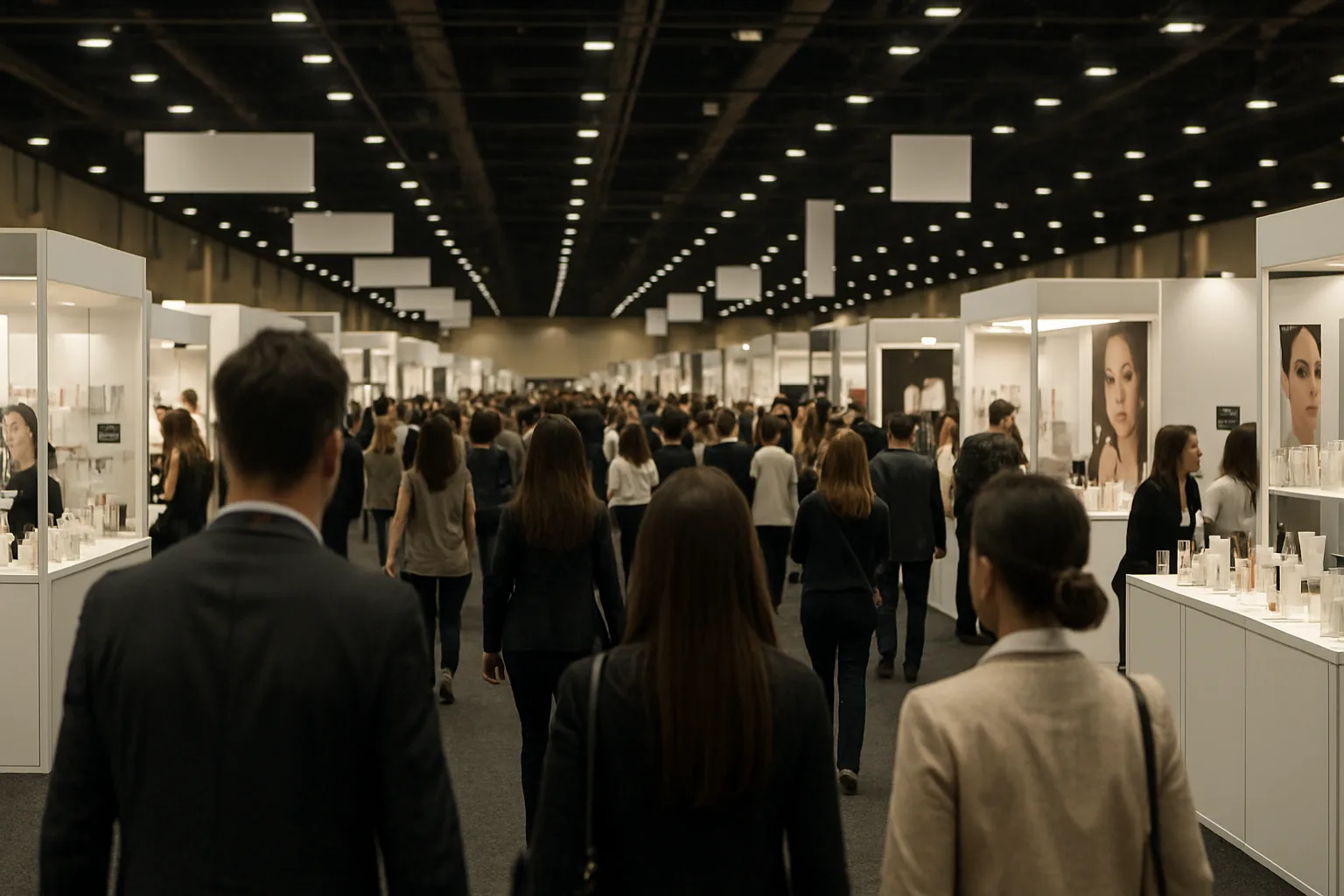
Cosmoprof North America returns to the Mandalay Bay Convention Center in Las Vegas from July 13 to 15, its 23rd edition, and this year on a new Monday-to-Wednesday pattern. The 2025 edition drew roughly 26,000 attendee visits and more than 1,000 exhibitors from over 100 countries. Those are trade-show numbers, not consumer numbers, and that distinction is the whole point of paying attention to this event.
Cosmoprof is a B2B show. Nobody on the Mandalay Bay floor is buying a lipstick to wear. They are buying shelf space, distribution deals, private-label capacity, and the next brand to put in front of a retail buyer. What the floor shows, better than most consumer data, is what the retail channel has decided to bet on for the next twelve to eighteen months.
The two shows in one hall
It helps to separate the event into its two halves. Cosmoprof North America is the finished-goods show: skin care, hair care, nail care, fragrance, tools, and the fast-growing organic and "clean" segments. Cosmopack North America, running alongside it, is the supply-side show: raw materials, ingredients, private-label manufacturing, packaging, and filling machinery.
Most coverage fixates on the finished-goods side because that is where the recognizable brands and the influencer moments are. The more informative half is Cosmopack. The contract manufacturers and packaging suppliers exhibiting there are the ones who will actually produce the products a retail buyer commits to in Q1 2027. When private-label capacity is heavily booked and the packaging suppliers are showing refill-first formats, you are looking at where retailer own-brand programs are going before the retailers announce them.
What the buyer program signals
The part of Cosmoprof worth watching closely is the Buyer Program, the pre-arranged meeting system that pairs exhibitors with retail and distribution buyers. This is the mechanism that turns a booth into a purchase order.
The composition of who shows up matters. In recent years the buyer mix has tilted away from pure department-store beauty halls and toward specialty (Ulta, Sephora), mass (Target, Walmart beauty), and the distributor networks that supply salons and independent retail. That tilt tracks the broader collapse of department-store beauty as the default gatekeeper. A brand that ten years ago needed a department-store counter to get discovered now needs a specialty endcap, a distributor relationship, or a marketplace presence, and Cosmoprof's floor has reorganized itself around that reality.
Three things worth watching this year
Indie brand density. Cosmoprof's Discover zones have historically been where small brands get their first serious buyer meetings. The density and the geography of those brands is a read on where new beauty formation is happening. A heavier Korean, Brazilian, and Middle Eastern presence, which the international pavilions have shown in recent editions, tells you the next wave of "trending" formats is not being invented in the United States.
Refill and packaging economics. Watch the Cosmopack packaging suppliers. Refillable and concentrate formats have been a sustainability talking point for years, but the constraint has always been unit cost and the retail-shelf logistics of selling a refill next to a full-price unit. If the packaging suppliers are showing refill systems priced to actually work at mass retail, that is a more meaningful sustainability signal than any brand pledge.
The "dupe" supply chain, in the open. The contract-manufacturing layer that produces near-identical formulations for competing price tiers is not hidden at Cosmopack, it is the business model on display. The gap between a prestige serum and a mass-market equivalent is often a marketing budget and a label, produced down the aisle from each other. That is uncomfortable for brands and increasingly obvious to consumers, and the trade floor is where the mechanism is visible.
CosmoTalks and the trend report
The event's conference track, CosmoTalks, and its annual CosmoTrends report are the official version of what the organizers want the industry to take away. These are useful as a baseline, less because the trend calls are always right and more because they set the vocabulary the channel will use for the next year. When a term migrates from a CosmoTrends slide to a retailer's category-management deck, that is the trade show doing its actual job.
Why a retail-trends outlet covers a beauty show
Beauty is one of the few consumer categories where the retail channel structure is being rebuilt in real time. The department-store model is gone, specialty is consolidating, mass is expanding its beauty footprint, and marketplace and social commerce have collapsed the distance between a contract manufacturer and a consumer. A B2B trade show is where all of those forces are negotiated in person, one buyer meeting at a time.
We will be reporting from the floor at Mandalay Bay. The questions we are bringing: where is private-label capacity going, which buyer channels are growing their footprint, and whether the sustainability packaging story has finally reached a price point that survives contact with a retail P&L.
Update, July 17, 2026: the show is over. Read our report from the floor, Cosmoprof North America 2026: the beauty trade stops paying for novelty.