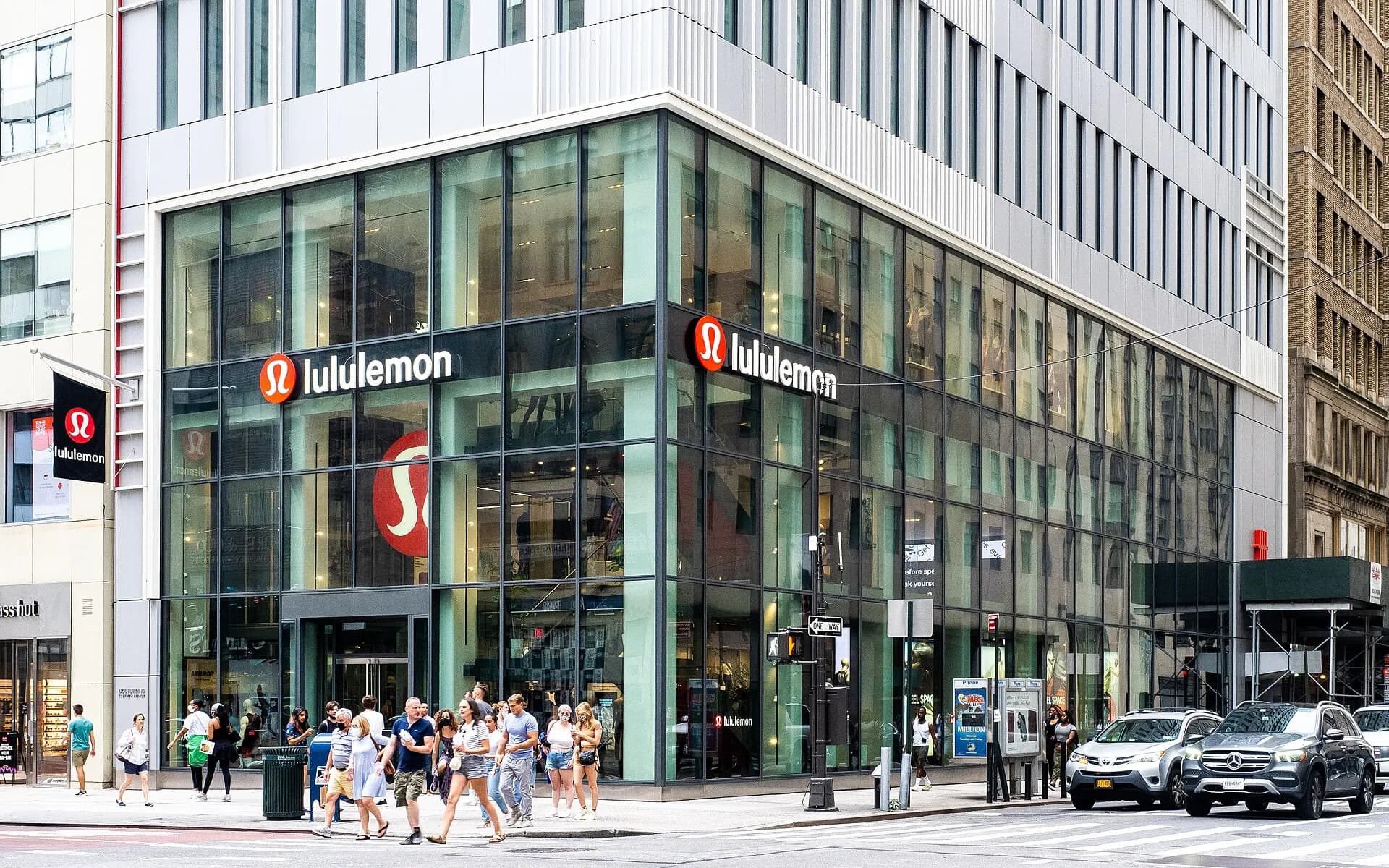
Lululemon reported its second quarter of fiscal 2026 on Thursday, September 3. The headline numbers are straightforward, and weak. Net revenue fell 4% to 2.4 billion dollars. Comparable sales fell 9%, or 10% on a constant dollar basis. In the Americas, comparable sales fell 12% and net revenue 8%, as reported by the company.
The company cut its full-year outlook. It had guided to revenue flat to down 1%, as reported by CNBC; it now expects net revenue of 10.35 to 10.5 billion dollars, a decline of 5% to 7%, and diluted earnings per share of 9.48 to 9.73 dollars. For the third quarter it guides to a revenue decline of 10% to 11%. Shares fell about 18% in extended trading, as reported by CNBC.
That much the market read in minutes. The more useful line is in a footnote.
The refund
During the quarter Lululemon received 134.5 million dollars in tariff refunds under the International Emergency Economic Powers Act, plus 4.1 million dollars of interest. The refunds were booked as a reduction of cost of goods sold. The company says they added 560 basis points to both gross margin and operating margin, and 0.86 dollars to diluted earnings per share.
Reported gross margin was 60.5%, up 200 basis points. Take the refund out and it is roughly 54.9%, which is about 360 basis points lower than a year earlier. Reported operating margin was 18.8%. Without the refund it is roughly 13.2%.
Earnings per share were 2.92 dollars against 3.10 a year ago. Without the 0.86 dollars from refunds and interest, the underlying figure is closer to 2.06.
Nothing in that arithmetic is hidden. The company discloses the refund, quantifies it, and says the outlook "does not reflect any further potential tariff refunds." But it is the kind of item that makes a margin line look like a recovery when it is not one.
Why this matters beyond one brand
Lululemon will not be the only retailer with this footnote. IEEPA tariff refunds are a one-time cash event landing in the middle of the year for any importer that paid those duties. Expect them in several second-quarter reports this month, and expect them to make gross margins look healthier than the underlying business.
The practical rule for reading these quarters: find the refund, subtract it, then compare. A retailer that had a genuinely good quarter will still look good after the subtraction. One that did not will look like Lululemon: a brand whose home market is shrinking at double digits, with the refund covering a large part of the margin pressure.
What is actually working
International net revenue grew 4%, or 2% in constant dollars, though international comparable sales still fell 3%. Inventories were down 1% in dollars and 7% in units, which means the company is not carrying a markdown problem into the second half. It opened nine net new company-operated stores and ended the quarter with 825.
Leadership is in transition. The results were presented by interim co-CEOs Meghan Frank and André Maestrini, and the company said its incoming CEO, Heidi O'Neill, starts the following week. Frank described the revised outlook as "a prudent approach" and pointed to stronger product, more marketing investment and cost discipline.
The third-quarter guide, a revenue decline of 10% to 11% with no refund to cushion it, is the first number the new CEO inherits.
Sources: lululemon athletica inc., second quarter fiscal 2026 results (SEC exhibit 99.1), September 3, 2026; CNBC, "Lululemon (LULU) Q2 2026 earnings", September 3, 2026. Margin figures excluding refunds are Retail to See calculations from the company's disclosed 560 basis point effect.



.jpg)