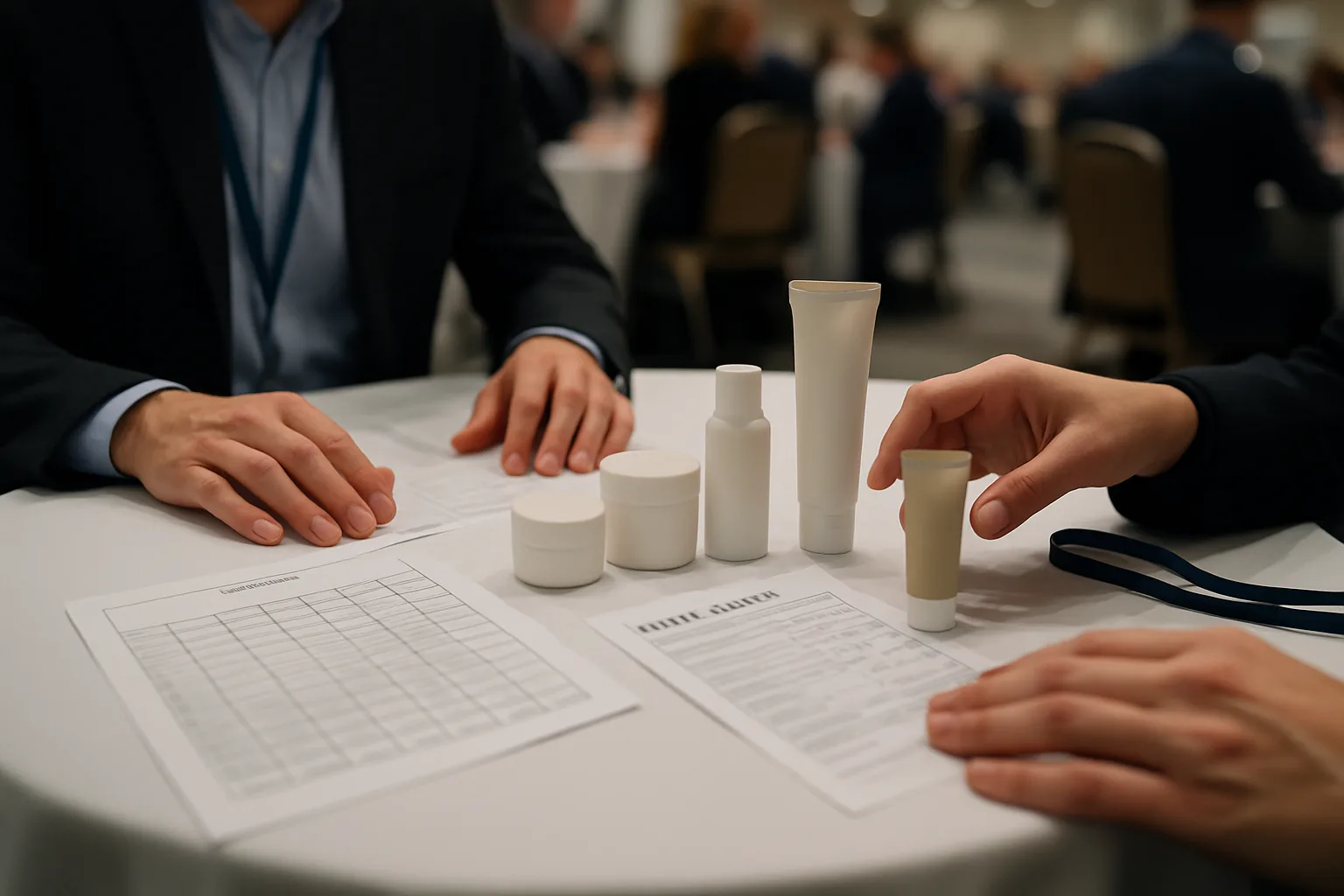
Every beauty founder has a version of the same fantasy about mass distribution: the buyer sees the product, understands it, and says yes. The real thing looks like a conference hall full of round tables, a printed schedule, and a bell.
Meet the Market, the supplier-to-retailer program that fills the first day of the NACDS Total Store Expo, runs on August 15 this year from 9:00 to 5:00 in Boston. The association arranges every appointment. Retail buyers stay at their own tables and the exhibitors rotate. Each meeting lasts ten minutes, with two minutes to get to the next table. Companies get one schedule and may seat two people at it. The program itself carries no fee, but participation requires an exhibit booth, and it is aimed at companies that are new to NACDS or bringing new products.
In 2025 that arrangement produced more than 5,600 meetings.
Who is on the other side of the table
The name of the association says chain drug stores. The buyer list says something wider. NACDS brings buyers, category managers and product decision-makers from drug, supermarkets, club, mass merchants, convenience, dollar and specialty retail.
For a beauty brand, that is the practical value of the day. The channels that have been taking mass beauty share are all in the room at once, and the meeting you were not expecting to matter, the dollar or convenience buyer, is often the one whose door count and reorder cycle actually fit a young brand's supply.
What ten minutes rewards
The format is a filter, and it filters for a specific kind of preparation.
A ten-minute meeting has no room for the founding story. It has room for four things: what the product is, what it costs and what it makes the retailer, how it ships, and where it goes on the planogram. Brands that arrive with a line sheet, a case pack, a margin number and a velocity figure from another channel use the time. Brands that arrive with a brand deck spend eight minutes explaining themselves and two minutes being asked the questions they should have opened with.
The two-person limit matters more than it sounds. It forces a decision about who goes: the person who knows the product or the person who can commit to terms. The right answer is usually the second one, because the buyer's follow-up question is almost never about the formula.
Compare this to the Buyer Meetings program at Cosmoprof North America, which pairs exhibitors with retail and distribution buyers on a similar principle. The difference is the mix. Cosmoprof's room leans specialty, distribution and international. The NACDS room is the American mass channel, sitting still, for one day.
Why it counts for more this year
Because the number of chairs on the buyer side of those tables has fallen. Rite Aid finished liquidating in 2025, Walgreens went private and CVS spent the year absorbing stores and prescription files. The channel that emerged is more concentrated, and concentration means each of those ten-minute slots carries more doors behind it than it did two years ago.
That cuts both ways. A yes is worth more. A no closes more of the map. And the preparation gap between a brand that treats the meeting as a sales call and one that treats it as a pitch has never been more expensive.
The full TSE 2026 program, including the business program and Monday's insight sessions, runs through August 17 at the Menino Convention Center in Boston.