The most expensive word in beauty this autumn is "niche". Puig, the Barcelona group behind Carolina Herrera, Rabanne and Charlotte Tilbury, is reported to be in final talks with Artessence Group to buy Parfums de Marly, the Paris house known for its rearing-horse bottles and for Delina, one of the most recognisable pink flacons on any perfume counter. Industry sources told WWD that the talks are at an advanced stage, as reported by TheIndustry.beauty and Cosmetics Business. Miss Tweed, citing industry sources, says Puig has been in exclusive talks since the week of November 9 for a controlling stake, in a deal that could value the brand at $1.8 billion to $2 billion. Neither Puig nor Artessence has commented.
Nothing is signed. But the shape of the deal is already clear enough to judge.
What is on the table
Parfums de Marly was founded in 2009 by Julien Sprecher. Advent International bought it in June 2023 together with Initio Parfums Privés, and the two houses sit inside Artessence, where Advent holds the majority, according to Cosmetics Business. In October, Reuters reported that CVC Capital Partners and Cinven were also looking at the brand, and one source told the agency it could be valued at less than €2 billion, as reported by TheIndustry.beauty. Jefferies and Goldman Sachs were hired as advisers in October 2025, chief executive Patrice Béliard confirmed at the time.
The number that put the brand in play came from Béliard himself. In an interview with WWD in April, he said Parfums de Marly generated more than $780 million in retail sales in the fiscal year ended March 31, 2026, up 42%, as reported by TheIndustry.beauty. That is retail sales, the value of bottles sold at the counter, not the revenue the brand books after retailers take their margin. Measured against what the company actually invoices, a $2 billion price is a richer multiple than the headline suggests.
Why Puig, and why now
For Puig, this is the obvious next move, and it follows two that did not happen. Its talks with The Estée Lauder Companies ended in May, and in September it agreed instead to take full ownership of the Spanish dermocosmetics brand Isdin, according to Cosmetics Business. Its Vision 2032 plan targets net revenue above €8 billion and a top-two position in fragrance, with niche fragrance named as one of four investment priorities, as reported by TheIndustry.beauty. It already owns Byredo, Penhaligon's, L'Artisan Parfumeur and Dries Van Noten's perfumes.
Its own third quarter explains the urgency. Puig reported record net revenue of about €1.39 billion, up 5.6% like for like, according to Premium Beauty News. But its Fragrance and Fashion division, around 72% of the business, grew only 3.9% like for like to €985.8 million, while makeup rose 16.1%, as reported by The Impression and Happi. Inside that slower fragrance number, niche grew at double digits. The group's largest division is growing slowly, and its niche houses are where the growth is. Parfums de Marly would make that part of the portfolio much larger at once.
Puig is not alone in reading the market this way. When The Estée Lauder Companies lifted its outlook earlier this month, fragrance grew 20% organically and nearly doubled its profit, led by Le Labo, TOM FORD and KILIAN PARIS. Across the industry, high-priced perfume is the category that keeps paying, while skin care and makeup swing from quarter to quarter.
Where the logic gets thin
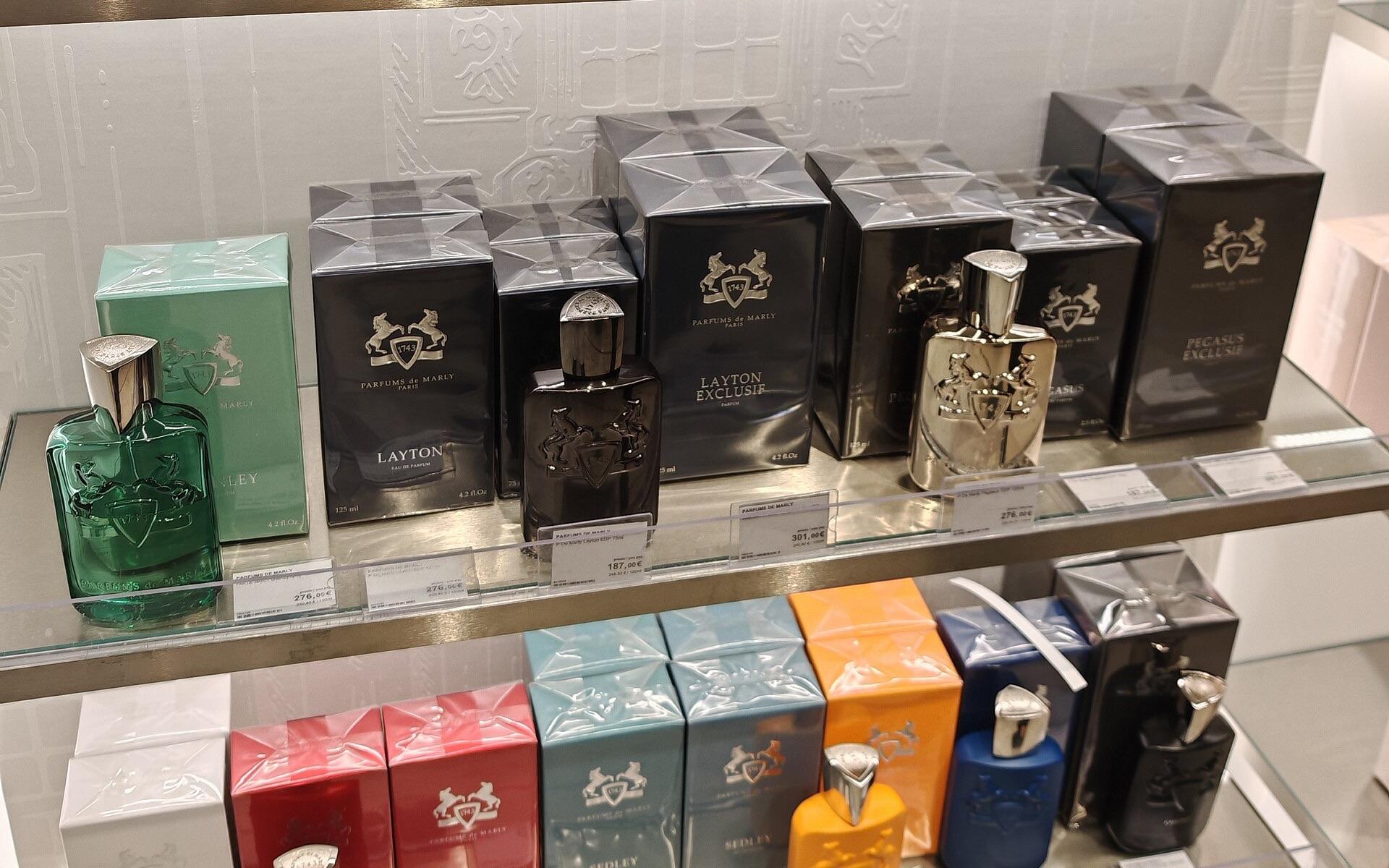
The case for the deal is strong. The case for the price is weaker, and it rests on one assumption: that a brand growing 42% a year keeps growing fast once it belongs to a group of Puig's size. Niche fragrance is a category of reputations built on scarcity, word of mouth and a limited number of doors. Byredo is the precedent Puig will be judged on: bought in 2022, it had to be scaled without losing what made it desirable. Parfums de Marly, with bottles already priced at €187 to €301 on the perfumery shelf, is closer to a luxury mass brand than to a cult label. That is a strength for volume and a risk for the premium that justifies the multiple.
There is also the question of timing. Private equity sells when growth is visible and the multiple is high. Advent bought in 2023, the brand grew sharply, and three bidders came to the table. The seller has chosen its moment. A buyer paying for the last three years has to believe in the next five.
The same week, Miss Tweed reported that MarcyPen, the investment firm co-founded by Jay-Z among others, is in the final stages of buying LVMH's 50% stake in Rihanna's Fenty Beauty. Two very different deals, one shared signal: the big groups are deciding which beauty assets to own outright and which to let go, and they are paying most for fragrance.
Our verdict
Puig is buying the right asset for its strategy at a price set by the hottest moment in the category. If niche perfume keeps compounding, a $2 billion valuation will look disciplined in five years. If the category cools, Puig will own one more expensive horse, alongside a fragrance division that is already growing slowly. What to watch: whether the announcement, when it comes, discloses net revenue and margins rather than retail sales, and how much of Delina's success Puig can export to Asia-Pacific, where its third-quarter revenue rose about 12.9% like for like, helped by niche and makeup, according to The Moodie Davitt Report.
Sources: Sophie Smith, "Puig in final talks to acquire Parfums de Marly", TheIndustry.beauty, November 18, 2026; Alessandro Carrara, "Is Puig set to acquire Parfums de Marly?", Cosmetics Business, November 19, 2026; Astrid Wendlandt, "Puig in talks to buy Parfums de Marly, MarcyPen nears Fenty Beauty deal", Miss Tweed, November 17, 2026; WWD, "Is Puig Poised to Acquire Parfums de Marly?", November 2026; "Puig hits record Q3 sales", Premium Beauty News, October 2026; "Puig Q3 2026 results", The Impression, October 2026; "Net revenue soars 7.2% for Puig in Q3 2026", Happi, October 2026; "Puig rises to new heights with record third-quarter sales", The Moodie Davitt Report, October 2026.