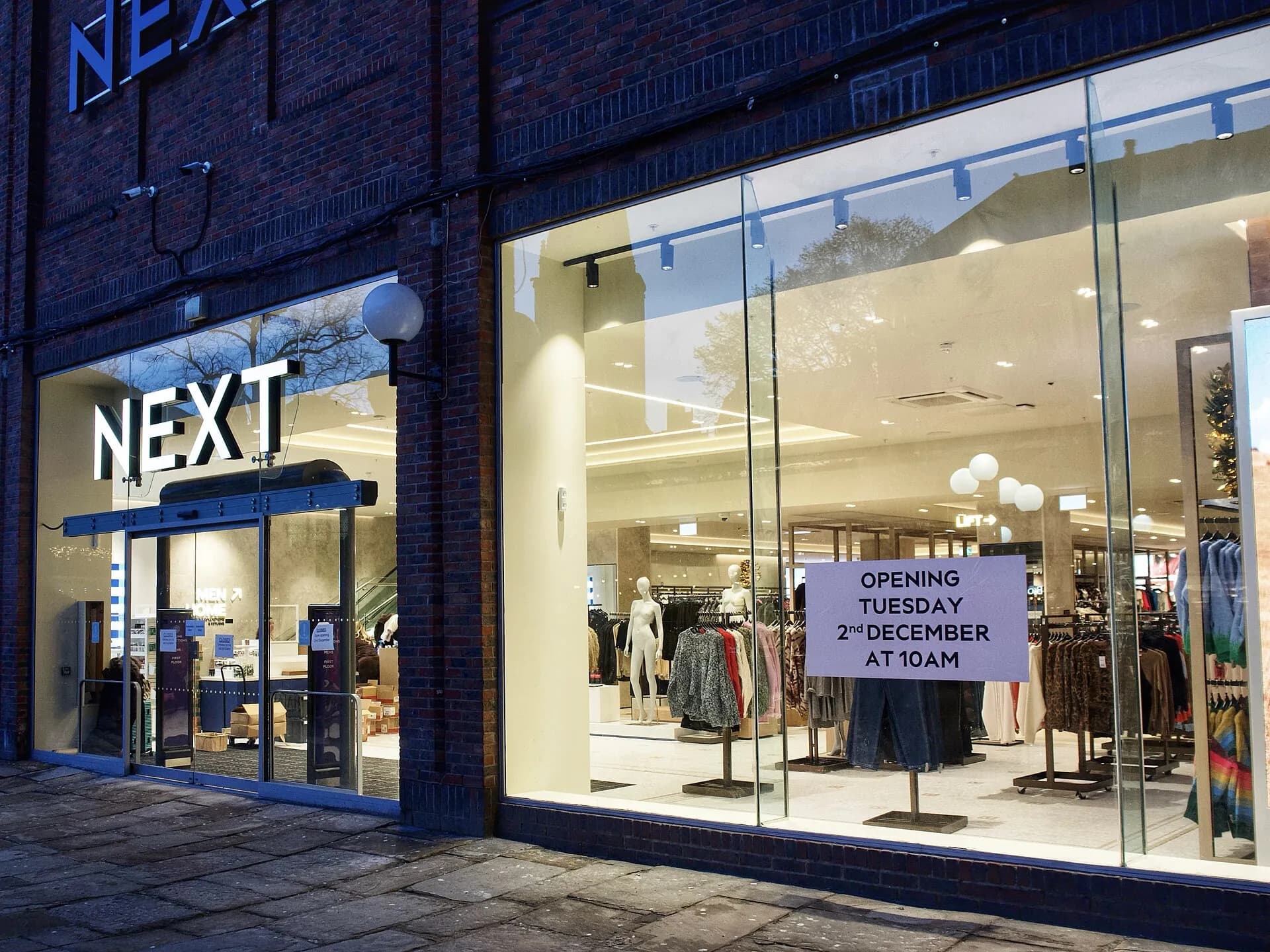
Next published its results for the 26 weeks to August 1 on Thursday, September 17, and the document reads like two reports stapled together. The first is about a retailer having one of its best halves in years. The second is about the country where, as reported by Reuters, it still makes about three quarters of its sales.
The headline numbers
Group profit before tax rose 10.5% to £569m, according to the company's release. Full price sales grew 7.7%, total sales including markdown 8.9%, and group sales including subsidiaries 9.0% to £3,540m. The pre-tax net margin improved by 0.3 points to 16.1%.
Next raised its full-year profit guidance by £12m to £1,255m, which would be 8.4% above last year's £1,158m. The company split the upgrade into £5m from higher sales expectations and £7m from better than expected cost savings, "particularly in warehousing," according to the release. Shareholders also get an interim dividend of 98p, payable on January 4, 2027. Shares closed up 1% on the day, as reported by Reuters.
Where the growth actually came from
The more useful table in the report is the one that splits the half by channel. UK full price sales rose 3.6%: online up 7.4%, stores down 1.7%. Online International rose 23.9%, according to the company. Measured against two years ago, international is up 58.8%.
In money terms, international added £133m of full price sales and the UK £69m. International now accounts for 26% of full price sales, against 74% for the UK. The Next brand itself fell 0.5% in the UK, with the growth there coming from wholly-owned brands, licences and third-party labels sold on next.co.uk. Next said it had planned for its own brand to fall, partly because it benefited last year from disruption at a major competitor.
So the shape is clear. Next is still a British retailer by revenue, but its growth engine is a website selling abroad and a marketplace of other people's brands at home.
Marketing that kept paying
The international story is mostly a marketing story, and an unusual one. Next spent £51m on marketing for its direct overseas websites in the half, up 63% from £31m, and the incremental profit per pound spent edged up from £1.75 to £1.77, according to the release. More spend normally means lower returns. Next gave several reasons why that did not happen, including better tools from Google and Meta and better local-language campaigns.
One of the reasons links directly to a theme we covered in cross-border e-commerce after de minimis. Next wrote that the EU's new charge on low-value imports "has meant that some overseas online retailers are spending much less on advertising, lowering media costs for everyone else." When the cheapest parcel shippers pull back from paid media, a retailer with stock already in Europe buys the same audience for less.
That stock position matters for the second half. Next said international growth will slow to 20.5%, because last August it moved its European aggregator business onto ZEOS distribution services, which raised stock availability and makes the comparison tougher from here.
Total Platform: steady, not new
Total Platform, the service through which Next runs online operations for other brands, grew without adding anyone. Client online sales rose 21% to £122m and profit from services rose 23% to £8m, "with no new additions in the last year," according to the company. Investments and Total Platform together made £38m, up 36%, with a full-year estimate of £105m. Next also noted that new product systems being rolled out internally will flow through to its Total Platform partners, who run on the same infrastructure.
The UK warning
Then the tone changes. Next cut its second-half UK sales growth estimate from 2.8% to 2.0%, while raising international guidance by £40m. "Our primary concerns are rising inflation, higher mortgage interest costs and a weak employment market," the company wrote, adding that "these worries will only be compounded if they are accompanied by tax increases."
The report went further than most trading updates. It argued that the tax burden is at its highest in over 60 years and that further increases risk "stifling growth," in what it called "a vicious circle." Retail Gazette framed the message as Lord Wolfson urging the Chancellor to rule out tax rises at the Budget on October 28. Next itself said it does not expect "a precipitous decline in spending, rather a slow, steady decline as the year progresses."
This sits in a wider pattern we described in Europe's fashion mid-market squeeze. Next's answer to a flat home market has not been to fight harder for the British high street. It has been to sell more of other people's brands online and to sell its own abroad.
What to watch
Three things. First, whether the UK slowdown stays as gentle as Next modelled once the Budget is known, since the company itself tied its concerns to the outcome. Second, whether international marketing returns hold above the £1.50 hurdle as Next plans to raise second-half international marketing spend by 42%, according to the release. Third, whether Total Platform signs a new client, because a year without additions makes it a profitable service line rather than the growth platform it was pitched as.
Sources: NEXT plc, "Results for the Half Year 2026/27", September 17, 2026; Global Banking & Finance Review, "Britain's Next nudges up profit guidance", September 17, 2026 (Reuters); RTÉ, "Next nudges up its full year profit guidance again", September 17, 2026; Retail Gazette, "Next boss urges Chancellor to rule out tax rises at Budget", September 18, 2026.