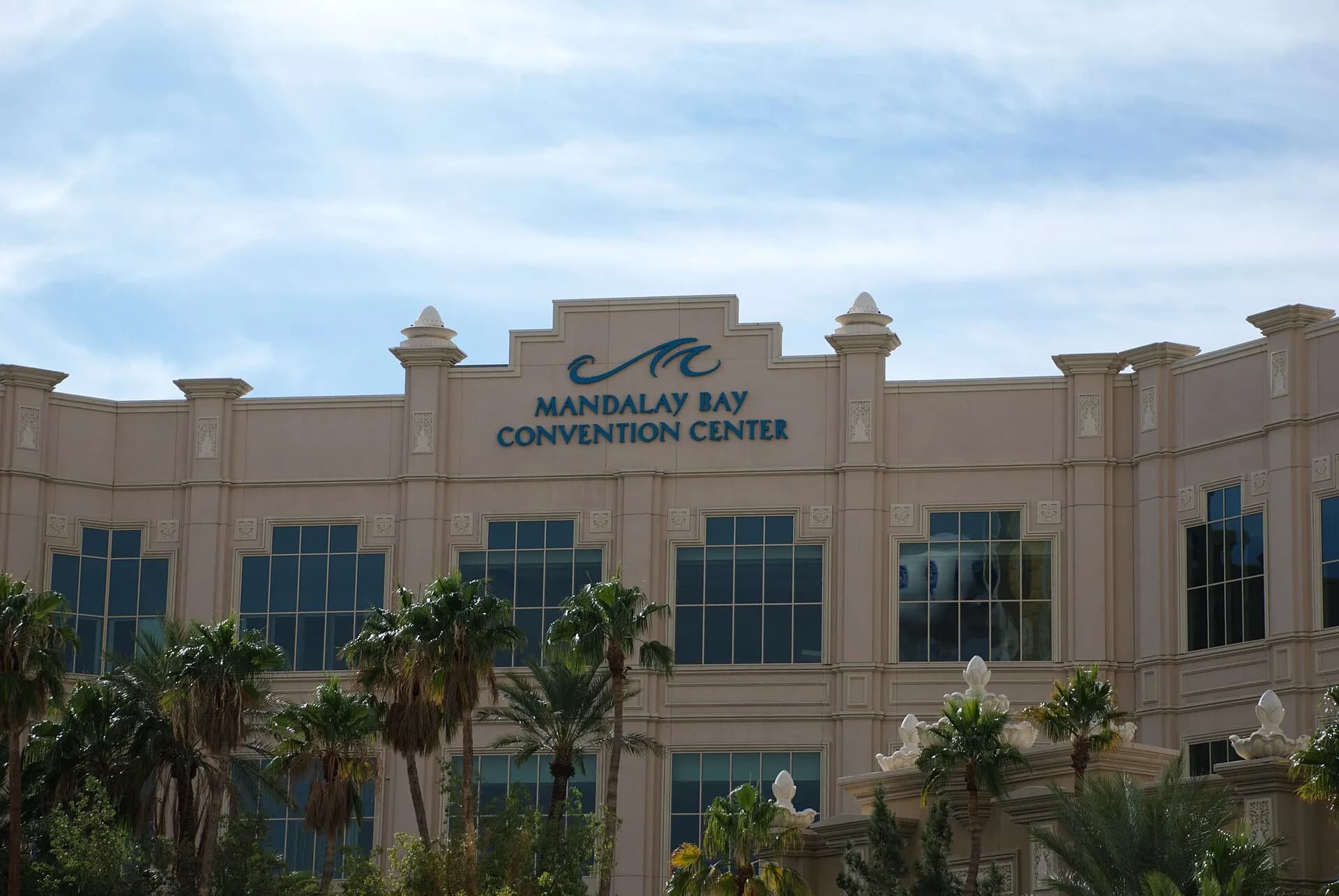
Groceryshop closed its 2026 edition at Mandalay Bay in Las Vegas on Thursday, September 24. More than 4,000 executives from grocery, convenience, pharmacy, dollar and club retail attended, and the show's Meetup program facilitated more than 30,000 business meetings, as reported by Mass Market Retailers. We followed it from the desk.
The agenda was built on three themes: AI-powered shopping, retail media's next phase, and a consumer redefining value under price pressure and GLP-1 adoption. The speeches mostly agreed on where grocery is going. Where they differed was on who gets to own the path.
The pitch: AI as the new front door
Instacart CEO Chris Rogers opened the show with the boldest line of the week: "AI is going to transform grocery more than any technology shift to date," as reported by Grocery Dive. The picture he described is a shopper who asks for meals and receives a personalized cart, instead of building a list item by item.
DoorDash co-founder Andy Fang made a narrower and more useful claim. AI, he argued, reduces friction rather than replacing choice, and users of DoorDash's Ask AI assistant spend more, check out faster and explore a wider range of products, as reported by Mass Market Retailers. DoorDash did not publish the figures behind that statement from the stage, so treat it as a direction, not a measurement.
The distribution side kept moving too. Instacart now offers delivery from 7,000 Dollar General and Popshelf stores across six states, with plans to expand to more than 20,000, as reported by Grocery Dive.
The counterweight: Kroger on data
Kroger's chief digital officer, Yael Cosset, gave the talk that deserves the most attention, because it came from the retailer rather than the platform. Kroger organizes its AI work in three stages, assisted, augmented and autonomous, and chooses among them by risk, how repeatable the task is and how much human judgment it needs, as reported by Mass Market Retailers. On the customer side it runs an AI shopping assistant for meal planning and conversational product search. On the staff side it is training more than 400,000 associates in AI literacy.
Cosset's warning was about the foundation. "If you don't address that data and stay committed to controlling the integrity of that data, you are going to inject some risk and some uncertainty and lack of accuracy in your artificial intelligence investment," he said, as reported by Grocery Dive. And the line that sums up the retailer's position: "The grocery winners in the age of AI will be the retailer who can earn our trust."
Read the two keynotes together and the tension is plain. Platforms want the AI assistant to be the place the shopping trip starts. Retailers want it to start inside their own app, running on their loyalty data. Whoever owns that first prompt owns the basket, and the retail media inventory that comes with it.
Retail media stops being advertising
That is why retail media came up as a business capability rather than an ad channel. Procter & Gamble's Jacques Hagopian argued that it works best when it is tied to merchandising and supply chain, as reported by Mass Market Retailers.
We have written before about the margin reality of retail media networks and the attribution problem. An AI assistant that builds the cart makes both questions sharper. If the shopper never scrolls a results page, there is no sponsored slot to sell in the old sense. The inventory becomes the recommendation itself.
Value, assembled
NielsenIQ's Nicole Kalita described the consumer side: one third of US households are financially stretched, a share that has grown since 2022, and shoppers are "assembling" value rather than hunting for deals, as reported by Mass Market Retailers. Sam's Club chief merchant Myron Frazier made the same point from the operator side: value includes delivery, checkout and meal solutions, not only price.
One regulatory note
Outside the hall, Seattle became the first US city to ban "surveillance pricing" through its Full and Transparent Pricing policy, which stops retailers from using personal data such as browsing history or social media to set prices, as reported by Grocery Dive. For an industry whose AI roadmap runs on personal data, that is the first local rule drawing a line through the personalization model. It will not be the last.
What to watch
Groceryshop set the frame. Shoptalk Fall in Chicago, October 13 to 15, is the next place to check whether general merchandise retailers are telling the same story. The question we will carry there: who owns the first prompt.
Sources: Mass Market Retailers, "AI, value and retail media take center stage at Groceryshop 2026", September 25, 2026; Mass Market Retailers, "Kroger highlights AI strategy rooted in retail expertise at GroceryShop 2026", September 22, 2026; Grocery Dive, "The Friday Checkout: Grocery AI is in full hype mode right now", September 25, 2026; Groceryshop 2026.