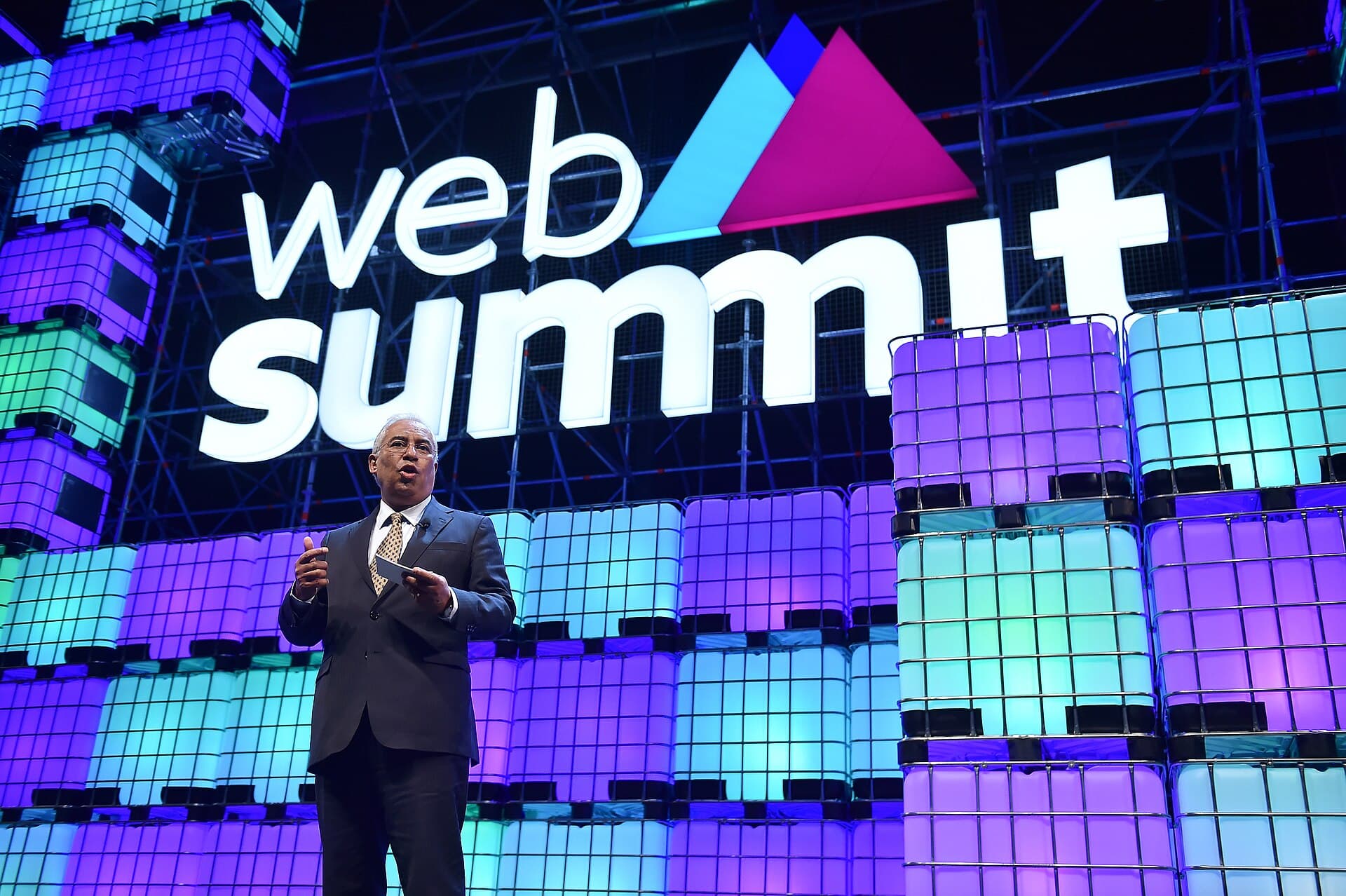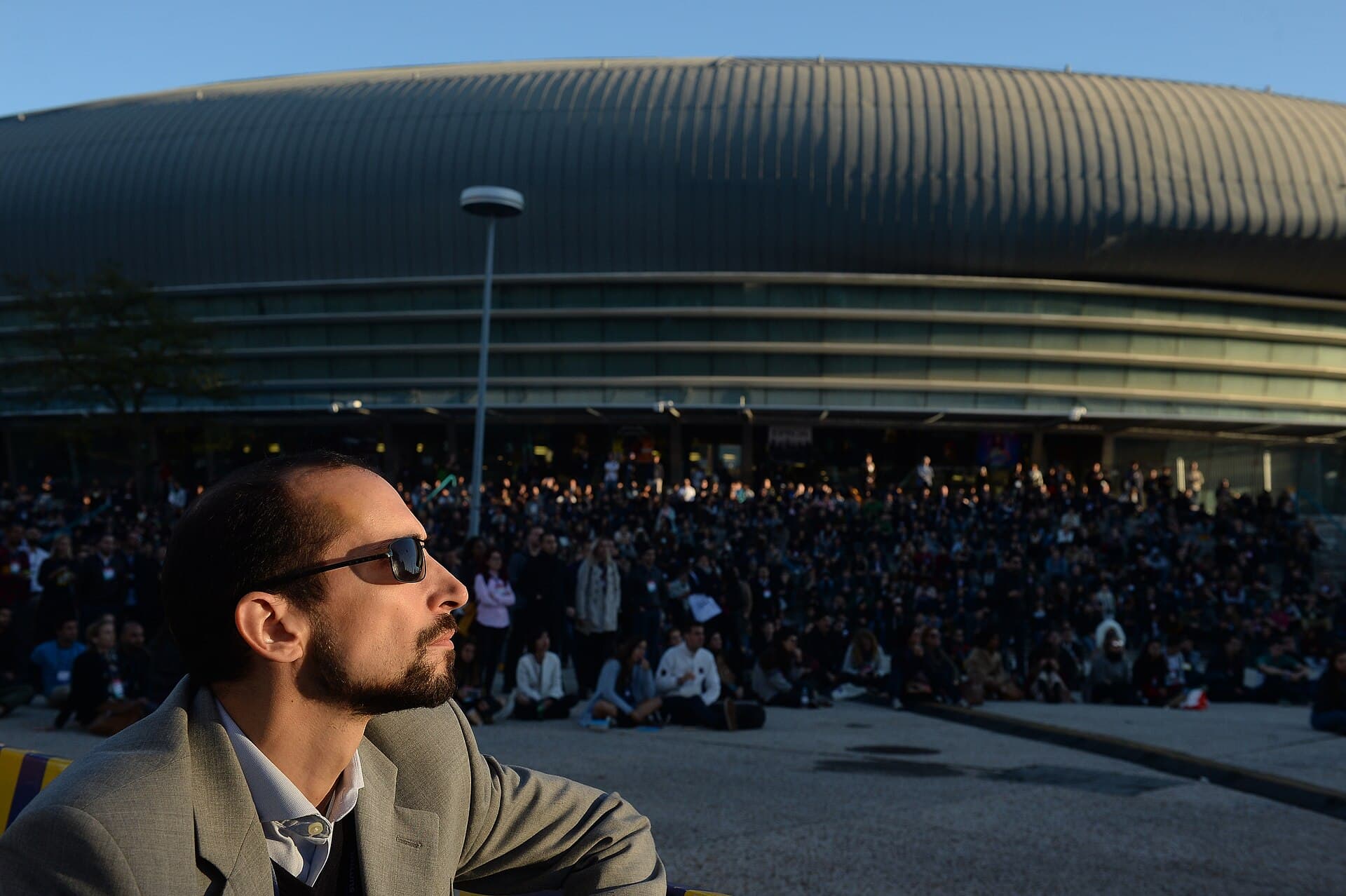
Web Summit opens its eleventh Lisbon edition on November 9. Before we cover it on the floor, it is worth looking at what the previous ten built, because the event that arrives next week is not the one that left Dublin, and the retail industry has spent most of that decade treating it as somebody else's conference.
The move, and the price of staying
Web Summit was founded in Dublin by Paddy Cosgrave and ran there until 2015. It moved to Lisbon in 2016 after a public falling-out with the Irish government and complaints about Dublin's capacity for large events, as reported by Fora. Two years later the Portuguese state and the city of Lisbon signed a ten-year deal worth 110 million euros, roughly 11 million a year, to keep it there until 2028, as reported by Fora and confirmed in 2022 by Essential Business. VentureBeat reported the same agreement with a buyout clause attached: leave early and the organizers pay back the balance.
That contract is the most honest description of what Web Summit is. It is not a trade show in the way the retail calendar understands the term, with a buyer, a supplier and an order book. It is a place-making project that a government pays for because of what it brings to the city. The organizers estimated an impact of around 300 million euros on Lisbon's hotels, restaurants, shops and transport for 2025, and reported their own revenue above 100 million euros, up from 79 million in 2024, as reported by Essential Business. The shops share of that estimate is the closest the event gets to a retail number, and it is an estimate from the party that benefits from it.
A plateau in people, a jump in money
The attendance curve tells a quieter story than the press releases. The 2024 edition gathered 71,528 people from 153 countries, as reported by Forbes Portugal. The 2025 edition, billed as a record, gathered 71,386 from 157 countries, with 2,725 startups, as reported by Portugal Global. More countries, slightly fewer people. Euronews was already asking in November 2024 whether the Lisbon venue could absorb any more growth. The honest reading is that Web Summit in Lisbon has reached the size of its room, the same ceiling we noted at Cosmetic 360 in Paris, and that the story is no longer how many come.
What did move was capital. Web Summit reported 1,857 investors for 2025, up 74% from 1,066 the year before, the highest in its history, and framed it as bucking the industry trend. That is the figure we take most seriously. A flat crowd with a much larger investor contingent means the event is becoming more of a deal room and less of a festival, and deal rooms are where the next generation of retail infrastructure, from checkout to returns to retail media, gets its funding.
The year the founder left, and came back
Any history of these editions has to include 2023. In October that year Cosgrave resigned as chief executive after his comments on the Israel-Hamas war led sponsors and speakers to pull out, among them Google, Meta, Intel, Siemens, Amazon Web Services and Stripe, as reported by Al Jazeera. Former Wikimedia Foundation chief Katherine Maher was appointed in his place. She left within months for NPR, and Cosgrave returned as chief executive in April 2024, as reported by The Irish Times.
The episode matters for anyone deciding whether to send a team to Lisbon. It showed that a 70,000-person event with a ten-year government contract can still lose its corporate partners in a week over a single person's posts, and that the institution behind it was not, in the end, separable from its founder. The 2024 and 2025 numbers suggest the event recovered. They do not suggest the structure changed.
Where retail has been in the building
Retail has never been the protagonist in Lisbon. The program is organized around stages, and commerce has had its own, where the sessions run closer to the operator's agenda: in 2025 the Commerce Stage hosted a talk titled "Why Retention Beats Acquisition", as reported by social.plus, whose chief executive gave it. That is a respectable topic and a modest footprint for an industry that spends more on technology than almost any other.
The more revealing retail signal of 2025 was not on a commerce panel. It was the crowd around Chinese humanoid robots, which People's Daily and the Hangzhou government both described as stealing the show. For an industry that has spent three years being told that automation will arrive in the warehouse first and the store later, the robots were the clearest preview of what the floor of a store might look like, and they came from manufacturers, not from retailers.
That is the pattern of the decade. Web Summit is where the tools that retail will buy are shown to the people who will fund them, usually before retail is in the room. It is the reason we are going.
We will be in Lisbon from November 9 to 12. Our preview of the 2026 edition is here, and our look at the rest of the Web Summit circuit, from Rio to Doha to Vancouver, is here.
Sources: Fora, "Web Summit has agreed a 10-year deal worth €110m to stay in Lisbon", October 2018; VentureBeat, "Web Summit inks $128 million deal to stay in Lisbon through 2028"; Essential Business, "Web Summit to remain in Lisbon until 2028", October 31, 2022; Essential Business, "Web Summit saw €100 million turnover in 2025", January 12, 2026; Portugal Global, Web Summit 2025 record attendance, November 2025; Forbes Portugal, "Mais de 1.800 investidores: Web Summit Lisboa bate recorde"; Web Summit, "Record investors at Web Summit 2025, bucking industry trends"; Euronews, "Questions raised over Portugal's capacity to host Europe's largest annual tech event", November 15, 2024; Al Jazeera, "Katherine Maher replaces former Web Summit CEO", October 30, 2023; The Irish Times, "Paddy Cosgrave returns as Web Summit CEO six months after resigning", April 8, 2024; social.plus, "Francesca Gargaglia took the Commerce Stage at Web Summit 2025"; People's Daily, "Chinese robotics steals spotlight at Web Summit in Lisbon", November 14, 2025.