Beautyworld Middle East closed its 29th edition at the Dubai World Trade Centre on October 29 with the kind of numbers that end the "regional show" conversation for good: a record 85,297 visitors from 178 countries, up roughly 20% year over year, and more than 2,500 exhibitors from 68 countries spread across 22 halls, up from 16 halls just a year ago. Visitor growth from the US ran +60%, France +70%, India +53%. "We've truly crossed borders," event director Ravi Ramchandni said as the show closed, and the origin data backs the line.
The market underneath the show
The fair is growing because the market underneath it is the best growth story in global beauty. The Middle East beauty and personal care market reached roughly $44 to 46 billion in 2024 depending on whose Euromonitor cut you read, and it grew about 18% in a year when the global category managed 7%. Fragrance, the Gulf's signature category, grew 11% across the region against 7% globally.
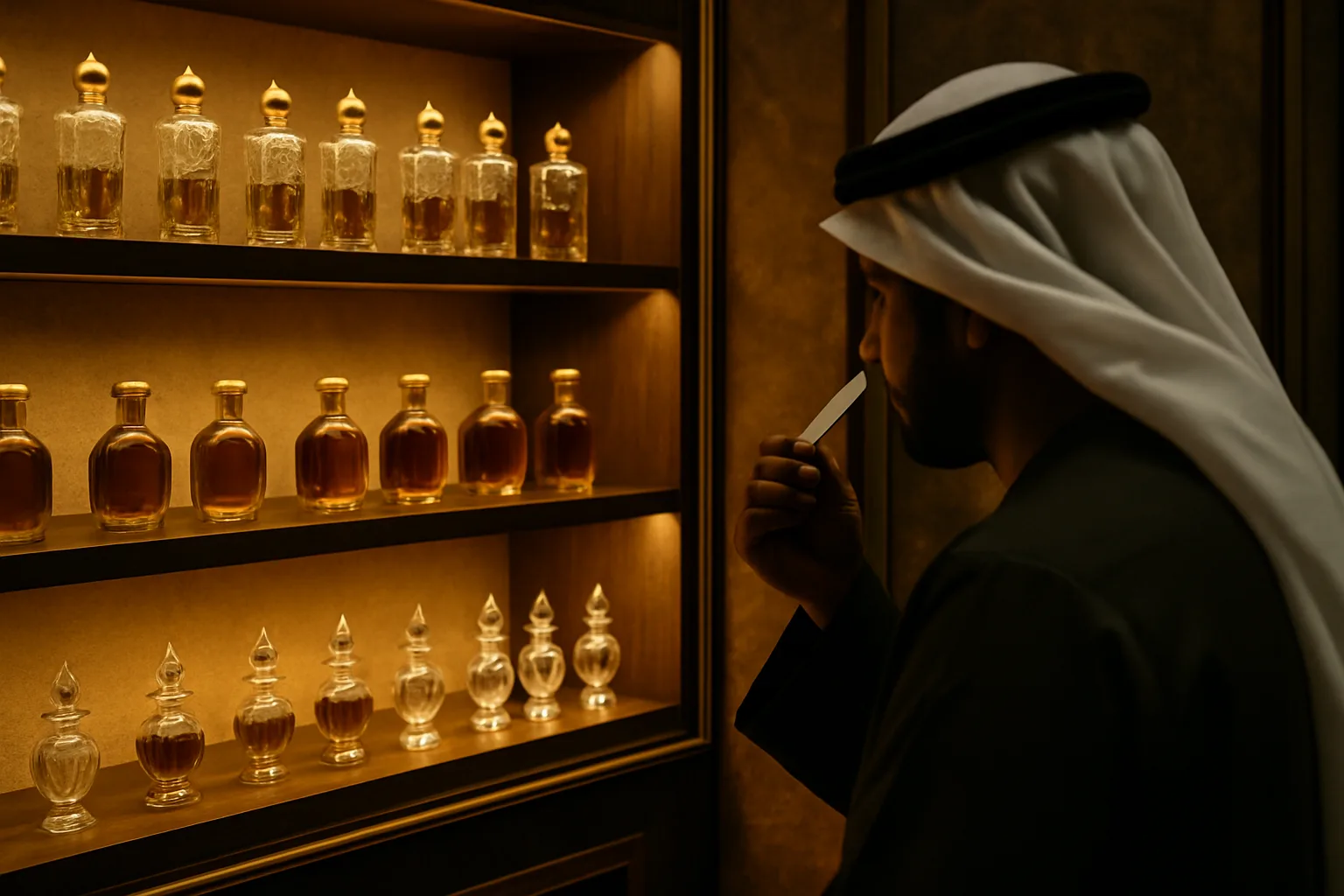
The consumer behind those numbers spends differently too. GCC women report spending around $63 a month on makeup and $52 on skincare, multiples of Western European averages, and Gulf men are a real skincare market rather than a hypothetical one. Fragrance is not a category here, it is the category: layering cultures, oud traditions, and a per-capita perfume consumption that makes the region every fragrance house's expansion slide.
Fragrance gets its own show within the show
The most strategically interesting move of the 2025 edition was the debut of "Next in Fragrance," a dedicated format bringing nine international natural-ingredient producers together with fifteen fragrance houses. That is a supply-chain play, not a consumer play: it positions Dubai as a place where fragrance gets sourced and composed, not just sold. For a region whose fragrance identity has mostly been expressed as consumption, moving upstream into ingredients and creation is the difference between being a market and being an industry.
The rest of the programming filled the halls with the show's now-standard machinery: beautyLIVE for hair artistry, the Next in Beauty conference, Nail It!, and an awards gala that crowned Jorge X international hairdresser of the year. Dyson, GHD, Revlon Professional, and Guinot worked the floor alongside the Korean, Brazilian, and regional brands that increasingly set the pace.
The geography of the next decade
What Dubai's trade fair demonstrates, more clearly than any market report, is that the beauty industry's center of gravity is genuinely multipolar now. The region's growth is forecast to compound at roughly 12% through 2027, the fastest in the world. Prestige beauty in the GCC grew 12% to $2.4 billion, and nearly half of that is fragrance.
Every global brand knows these numbers. The question the 2025 edition answered is whether the region's own trade infrastructure could match its consumption story. Twenty-two halls, 178 visiting countries, and a new ingredient-sourcing platform say yes. The 30th edition runs October 6 to 8, 2026, and it will be worth watching not for whether it grows, it will, but for how much of the show shifts from selling to the Gulf toward building in it.