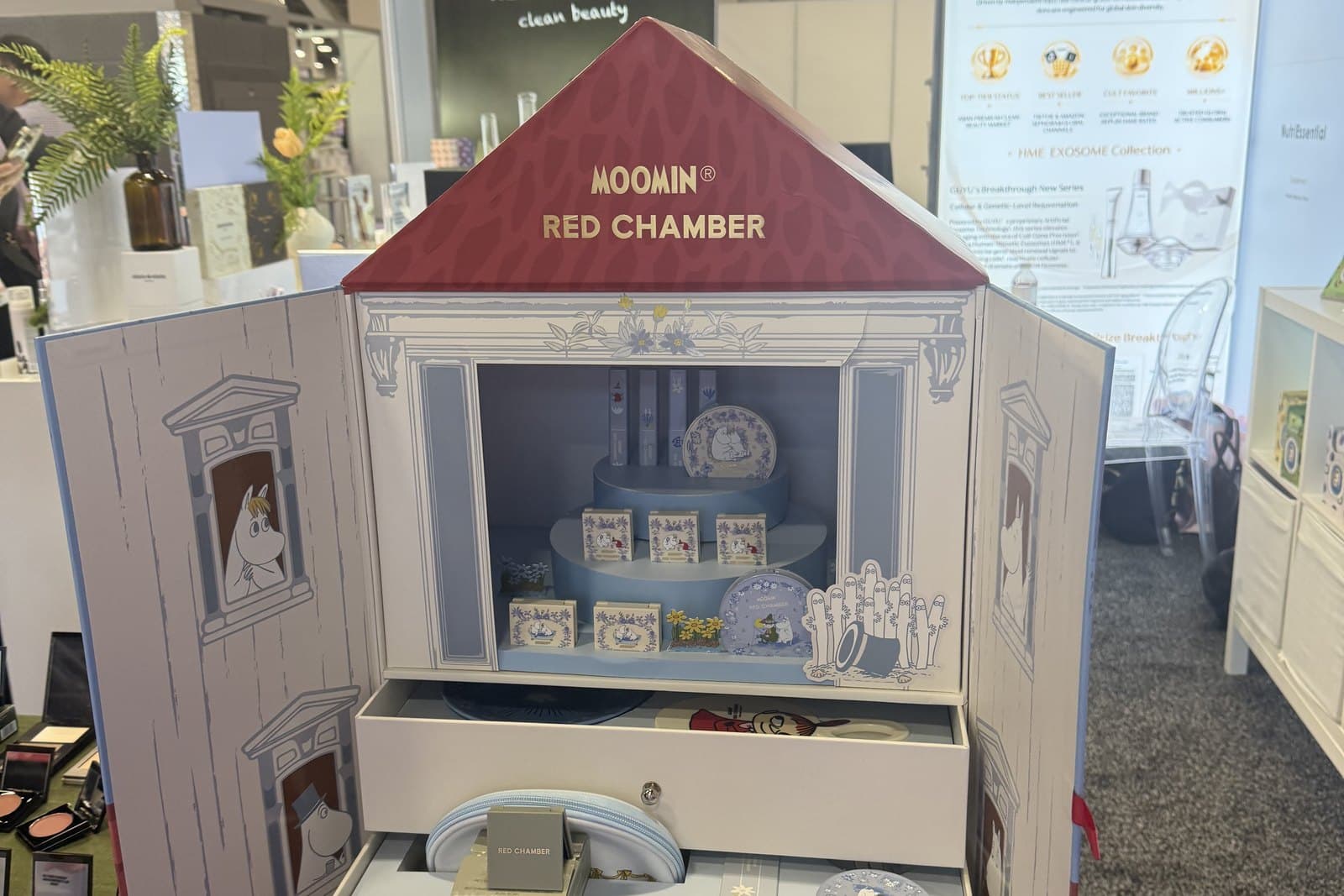
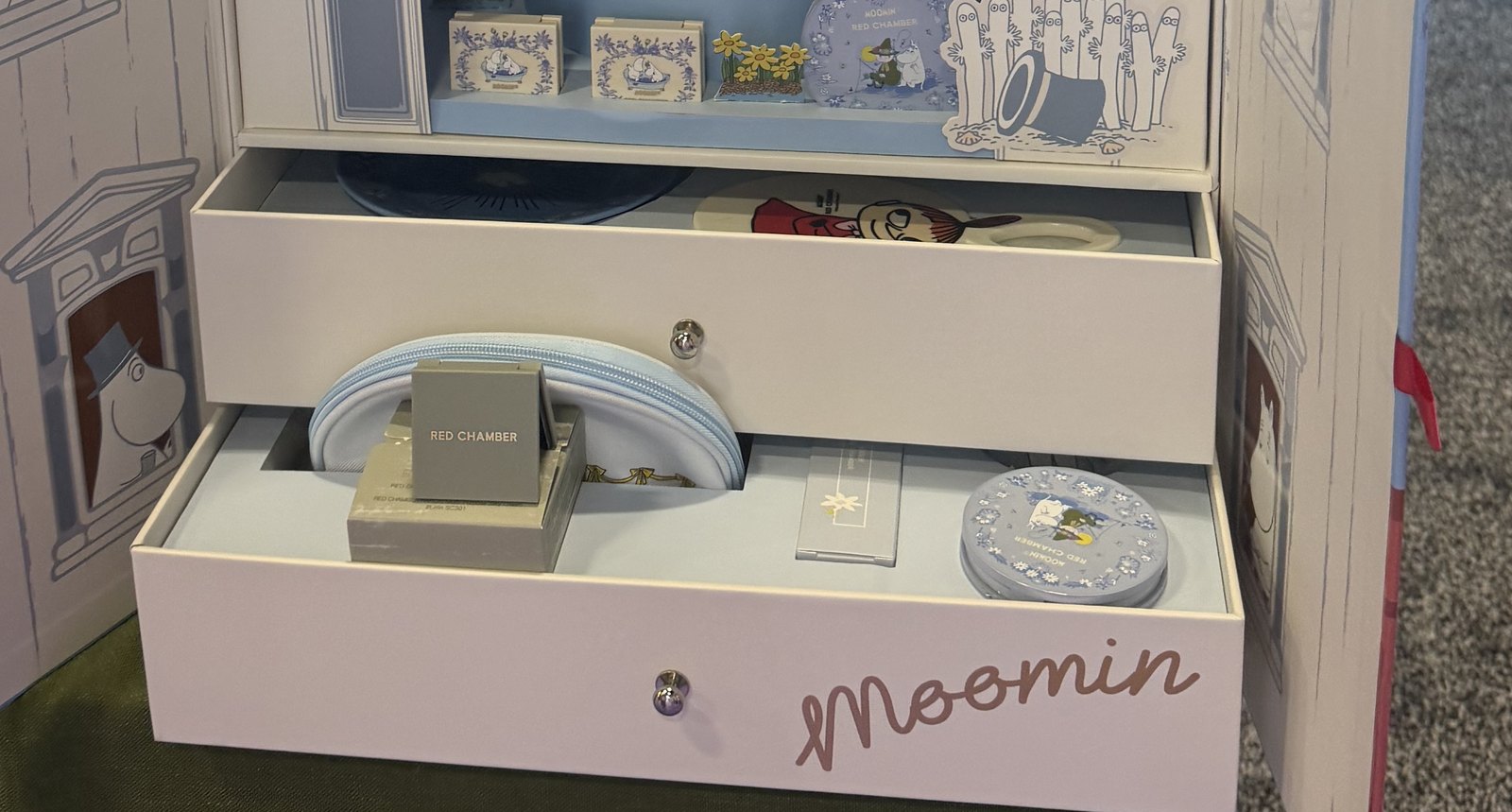
LAS VEGAS. It sat on a plain table in the skincare aisles, and it stopped more traffic than the stand behind it. A gift set built as a house: burgundy roof, gold lettering, two doors that open onto a lit interior where the products are staged on tiered platforms like a shop window, painted shutters with characters looking out of them, and two drawers underneath holding the rest of the collection.
The house belongs to Red Chamber, a clean-beauty makeup brand, in collaboration with Moomin, the characters created by Tove Jansson and licensed out of Finland for the better part of eighty years. Nostalgia was one of the five trends named in the post-show reporting from this edition. This is what it looks like when it is costed rather than felt.
What is actually being sold
Look past the set design and the commercial structure is clear. The collaboration spans the categories a licensed range can carry without formulation risk: multi-use cream sticks, pressed powders, lipsticks and a highlighter palette, on a brand platform that markets itself on what it leaves out, with no fragrance, alcohol, mineral oil or preservatives among the claims.
That combination is deliberate. Character licensing works best on products where the decoration can do the differentiating, because the formula underneath is a known quantity. A cream stick in four shades is a manufacturing problem that was solved years ago. A cream stick in four shades inside a house that a customer will keep on a shelf is a merchandising problem, and merchandising problems have far better margins.
The economics behind the cuteness
Three mechanics make this format work, and none of them are about charm.
The first is discovery. A licensed character arrives with an audience that already exists and already has an emotional relationship with the artwork. That audience does not need to be bought a second time through paid social, which is the single largest variable cost in launching a small beauty brand today. Licensing is, in effect, prepaid customer acquisition with a royalty attached instead of a media budget.
The second is the gifting calendar. Beauty gifting is one of the few parts of the category where the buyer and the user are different people, which changes what the pack has to do. A gift buyer cannot evaluate a texture, so they evaluate the object. A house with doors that open is legible as a gift from across a store, and it survives the two seconds of judgement that a gift purchase actually gets.
The third is the keepsake effect. The pouch, the tin and the box outlast the product inside them. That extends the brand's presence in a household long past the sell-by date of the makeup, and it creates a secondary market where limited editions hold or gain value. Collectibility is a real retail asset: it converts a seasonal SKU into an annual event and gives the brand a reason to return to the same shelf every year.
Where it gets expensive
The costs are equally structural, and they are why most brands should not do this.
Licensing is rented reach, not owned reach. The royalty is a permanent margin haircut, the term is finite, the approval process sits with the rights holder, and every design decision travels through it. Rights holders as carefully managed as the Moomin estate protect their characters tightly, which is what makes the licence valuable and also what makes the timeline long.
Then there is the pack itself. A structure like this house is a converting and assembly job, not a printing job, and it carries a minimum order quantity that has to be committed before a single unit is sold. Sell it through and it is the cheapest marketing the brand will ever buy. Miss the season and it becomes warehouse volume that cannot be discounted without damaging the collectible logic that justified it.
There is also a quieter tension worth naming, between a clean-beauty positioning built on subtraction and a gift architecture built on addition. A brand that markets itself on what it leaves out of the formula is selling a set with a great deal of material around it. That is not hypocrisy, but it is a question a retail sustainability team will ask, and the brands that have an answer ready will do better with European buyers than with American ones.
Why it showed up here
A trade show floor is a good place to see which ideas have moved from culture into supply chain. Nostalgia has been a consumer mood in beauty for several years. What was on the table in Las Vegas was the industrial version of it: a licence, a converter, a pack structure, a gifting window and a defined collector audience, all costed and ready to quote.
The interesting question for buyers is not whether the house is charming. It is which retailers this format is actually for. It is too bulky for a crowded prestige counter, too expensive for a discounter, and close to perfect for specialty retail, travel retail and marketplace gifting, which is exactly where the newest entrants at this show were shopping.
For the wider picture from Mandalay Bay, read our report on the edition where the beauty trade stopped paying for novelty.