LAS VEGAS. For three days in the middle of July, the Mandalay Bay Convention Center did what it does every summer: it turned the American beauty shelf into a floor plan. Cosmoprof North America closed its 23rd Las Vegas edition on July 15 with more than 26,500 attendee visits from 88 countries and over 950 exhibitors from 39 countries, and with a mood that was noticeably more sober than the numbers suggest.
Compare that with the 22nd edition we covered last July, which reported more than 26,000 visits and over 1,000 exhibitors. Traffic went up a little, the stand count came down a little. The show got denser: more buyers walking fewer aisles. That is usually what happens when a market stops expanding by addition and starts expanding by selection.
The selection was audible in the aisles. Twelve months ago the standard opening line at a stand was some version of this is new. This year, in booth after booth, the buyers we watched worked from a shorter and much less romantic script: what does it do, what is the proof, who is already selling it, and what does it cost to land.
Performance replaced novelty as the opening pitch
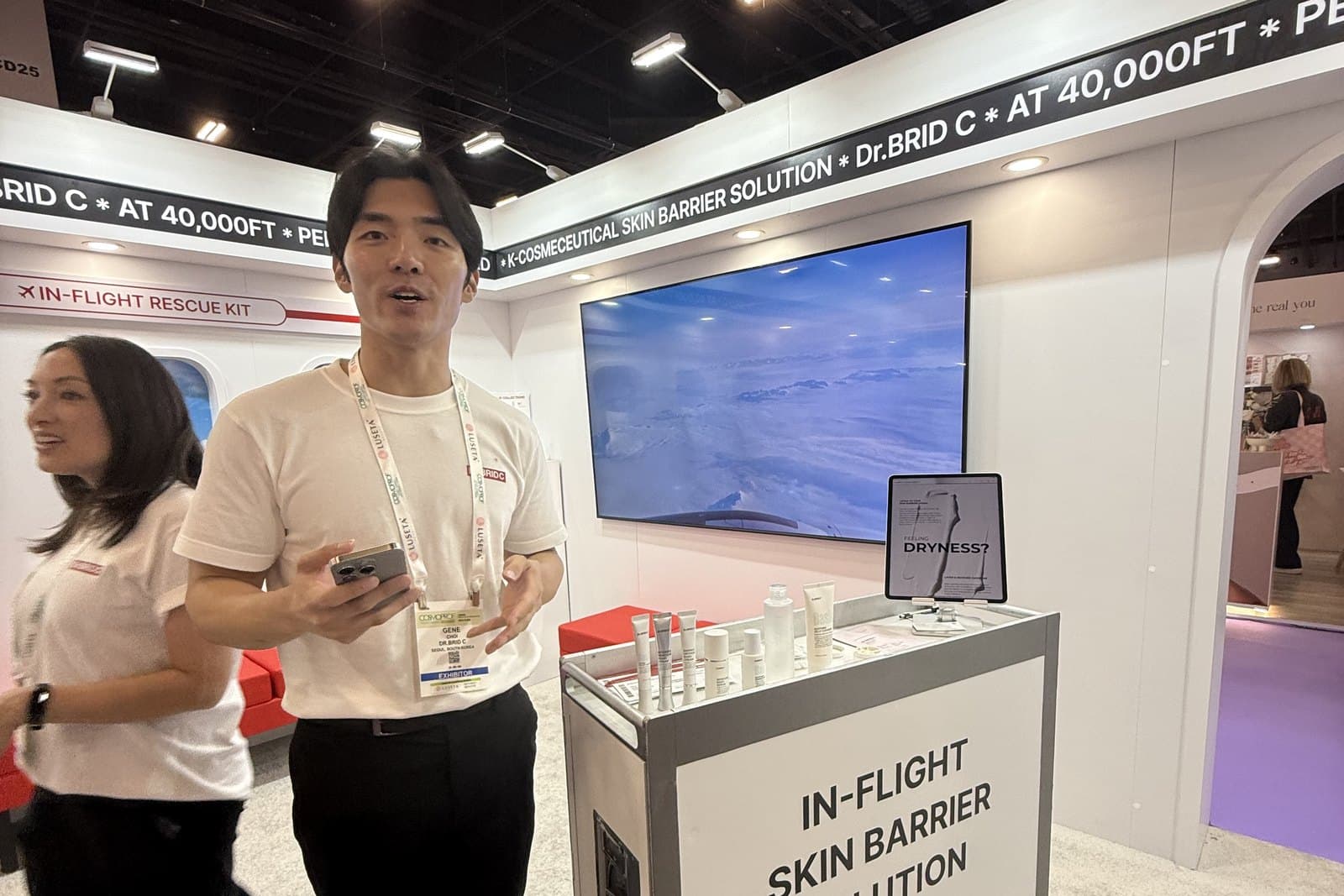
The clearest read on the floor was a shift in what an exhibitor leads with. Skin barrier support, recovery, repair and multifunctional formats were everywhere, and they were pitched as function rather than as discovery. Fashionista's post-show trend report named skin healing as one of the five most visible movements of the week, alongside patches, nostalgia, curl care and beauty tech, and that list matches what we saw: a floor that still wants pleasure and surprise, but expects a mechanism behind them.
That is a harder brief than it sounds. Innovation can no longer live in the ingredient list alone. It has to arrive as a benefit a consumer can name, a texture or format they can feel in three seconds, and a claim a buyer can defend in a merchandising meeting.
Korea is no longer a pavilion, it is the supply chain
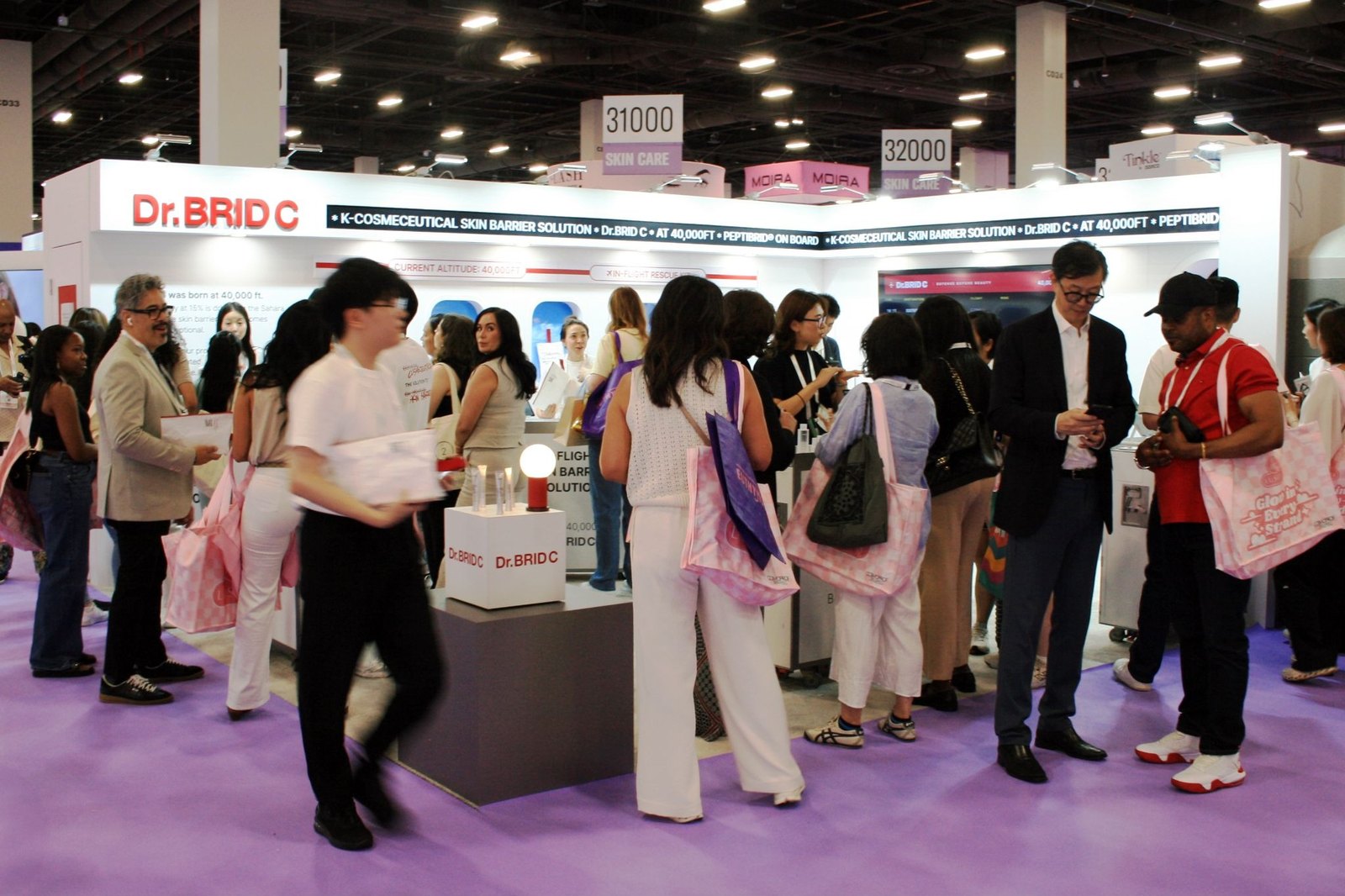
Korean beauty was the loudest international presence in Las Vegas again, and the organizers leaned into it: this edition added the DSH Korea Pitch Competition, run with the acquisitions arm of LG, which tells you exactly how the category is now being read by strategic buyers. A trade show does not build a pitch competition with a corporate acquisitions team unless the deals are already happening in the hallways.
The more important shift is that Korean codes have stopped being a separate shelf. Advanced textures, hybrid makeup and skincare formats, fast ingredient stories and highly visual application rituals now show up across brands that never describe themselves as K-beauty. PDRN is the clean example: two years ago it was clinic vocabulary, this year it was printed on packaging in a general skincare aisle.
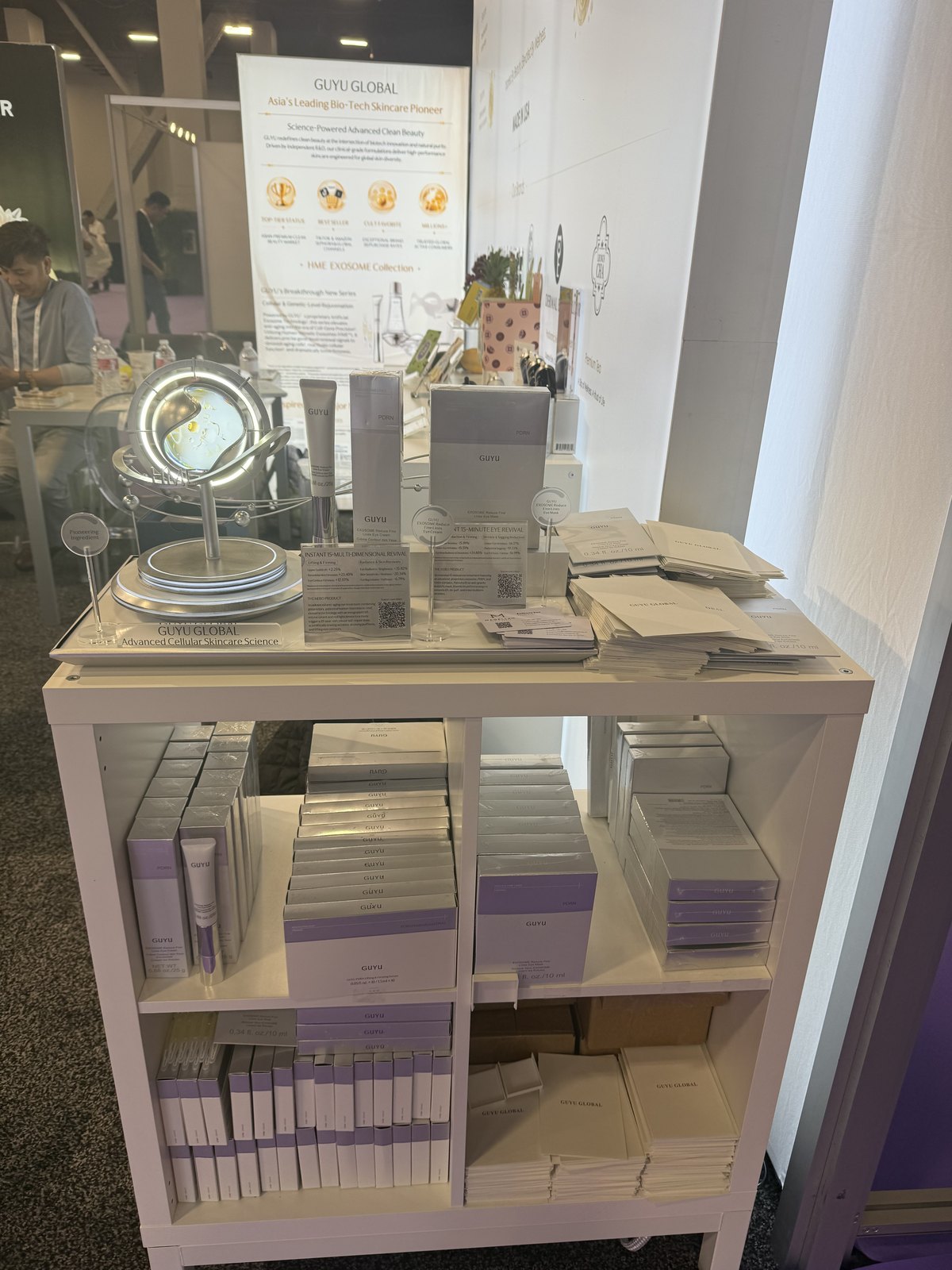
That table is also where the week's most uncomfortable question sat. When every stand prints a number, the number stops working as a differentiator and starts working as a cost of entry. We pulled that thread into a separate piece on the claims arms race and what buyers should be asking about it.
Sun care kept becoming ordinary skincare
SPF continued its move from seasonal category to daily one, and the conversation on the floor has almost entirely left protection factor behind. What is being sold now is texture, finish, compatibility with makeup, ease of reapplication and added skincare benefit. High protection is the entry ticket. Cosmetic elegance is what earns the repeat purchase.
For retailers that means segmentation, not a shelf: tinted formulas, sticks, sprays, serum textures, reapplication formats and hybrids that blur treatment, makeup and protection into one SKU. It is one of the few places in beauty where performance and pleasure are not in tension.
Format is doing the work of innovation
Not every idea worth buying came out of a laboratory. Patches remain the cleanest example of format as value proposition: instantly legible, visual, travel friendly, naturally suited to social content, and now spreading across face, eye, body and targeted treatment.
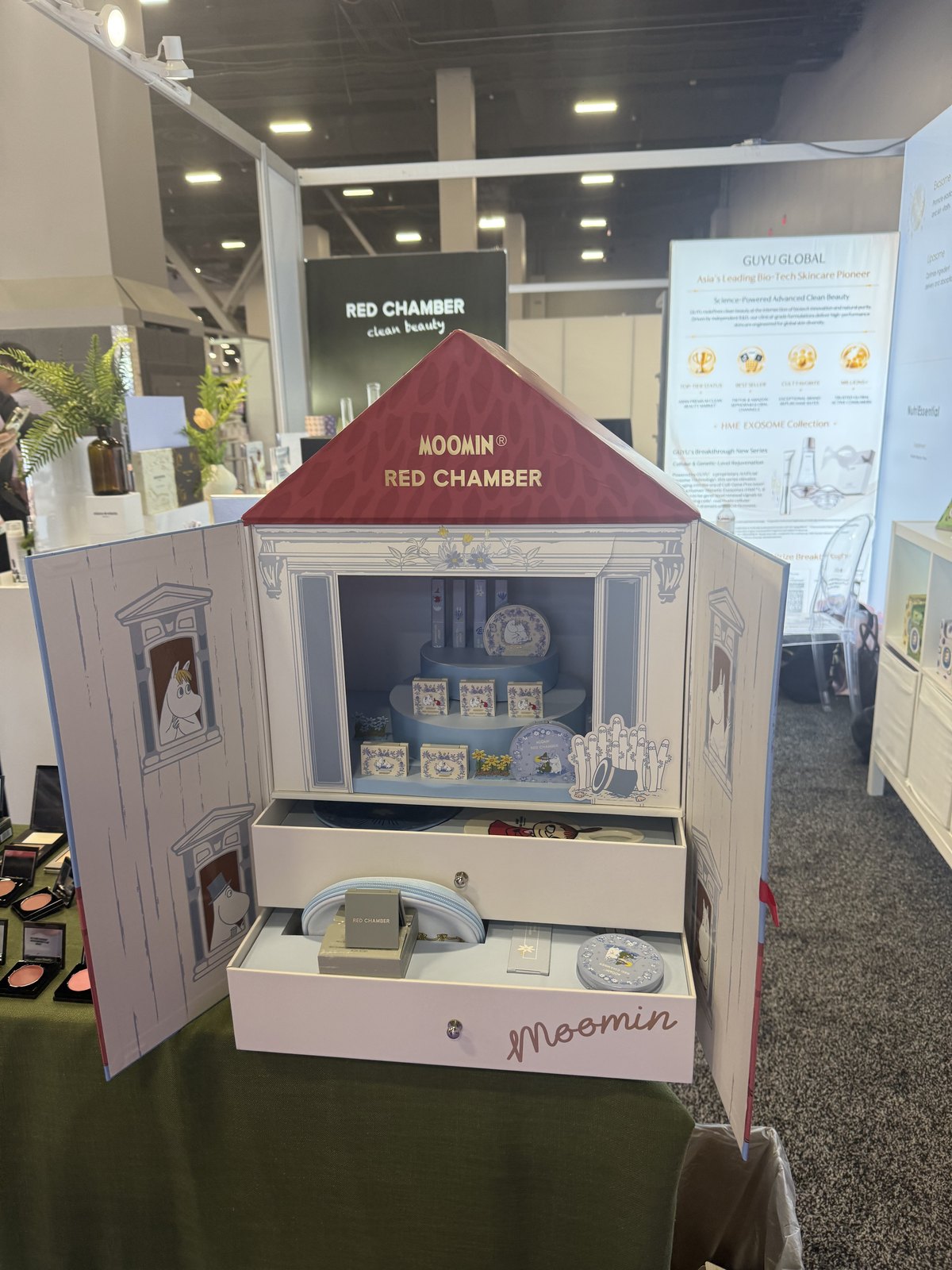
Nostalgia sat next to that, and it was more commercially serious than it looked. The most photographed object we saw all week was a gift set built as a doll house, a licensed collaboration that turns packaging into both a display unit and a keepsake. We wrote that one up on its own, because character licensing is quietly rewriting beauty's gifting economics.
Beauty tech had to justify itself
Beauty technology spent several years oscillating between real innovation and gadget fatigue. In Las Vegas the concepts that held attention had dropped the futurism and picked up a job: diagnosis, personalization, application, or measurable result. A connected device or an AI diagnostic only creates value when it makes the experience simpler, more accurate or more effective than the analogue alternative, and buyers asked that question out loud this year.
The buyer stopped being the last step
Cosmoprof is still a product show, but it behaved like a distribution show. The organizers brought their Buyer Meetings matchmaking format to Las Vegas after launching it in Miami, moved CosmoTalks onto the show floor, expanded the Entrepreneur Academy into a 201 curriculum, added an onsite podcast studio and launched the first OPEN Fellowship.
The retailer list is the part worth reading twice. Among the first-time retail attendees were Buc-ee's, Mercado Libre, Rosewood Hotels, WHSmith, SuperPharm, SUKOSHI, All-American, The Beauty Spy, Orcutt and Sol Retail. That is a travel-center chain, a Latin American marketplace, a hotel group, a travel retailer and a pharmacy chain sitting in the same buyer room. The conference program pointed the same way, with Amanda Baldwin of Olaplex, Penny Coy of Ulta Beauty, Christina Tran of TikTok Shop, Linda Dang of SUKOSHI and Jenine Guerriero of Givaudan on the agenda.
A product designed for TikTok Shop does not carry the same storytelling, pack architecture or price logic as one built for a prestige counter, a hotel amenity kit or an airport impulse shelf. Distribution is no longer the final step of development. It is increasingly the brief. We unpacked what that does to a launch plan in a separate analysis of the new matchmaking math.
Cosmopack: the speed is real, so is the sameness
The supply halls remain the most strategic square metres of the fair. Contract manufacturers, private-label specialists, packaging suppliers, ingredient houses and machinery providers are no longer presenting components. They are presenting near market-ready concepts that can cut a development timeline from years to months.
The upside is agility. The downside is that everyone gets the same agility. As launching gets easier, building something defensible gets harder, and the advantage moves from access to manufacturing toward distribution, brand equity and the discipline to say no to the concept everyone else is also being shown.
What we are watching
The Cosmoprof and Cosmopack North America Awards, presented with BEAUTYSTREAMS, again picked six winners from 24 finalists across fragrance, skin and body care, hair, makeup and nails, formulation and packaging. As usual, the winners matter less than the pattern: the categories that reward supply chain work now sit level with the ones that reward finished products.
Three things to watch between now and the next edition. Whether the exhibitor count keeps consolidating, which would confirm that the show is selecting rather than shrinking. Whether the claims inflation on the floor draws a regulatory response in the United States. And whether the new retail entrants come back as buyers rather than as visitors, because that is the only real test of the matchmaking program.
Cosmoprof North America returns to Miami Beach on January 26 to 28, 2027, and to Las Vegas for its 24th edition on July 13 to 15, 2027. We will be at both. If you were in Las Vegas and we missed your stand, write to me at celia@retailtosee.com.