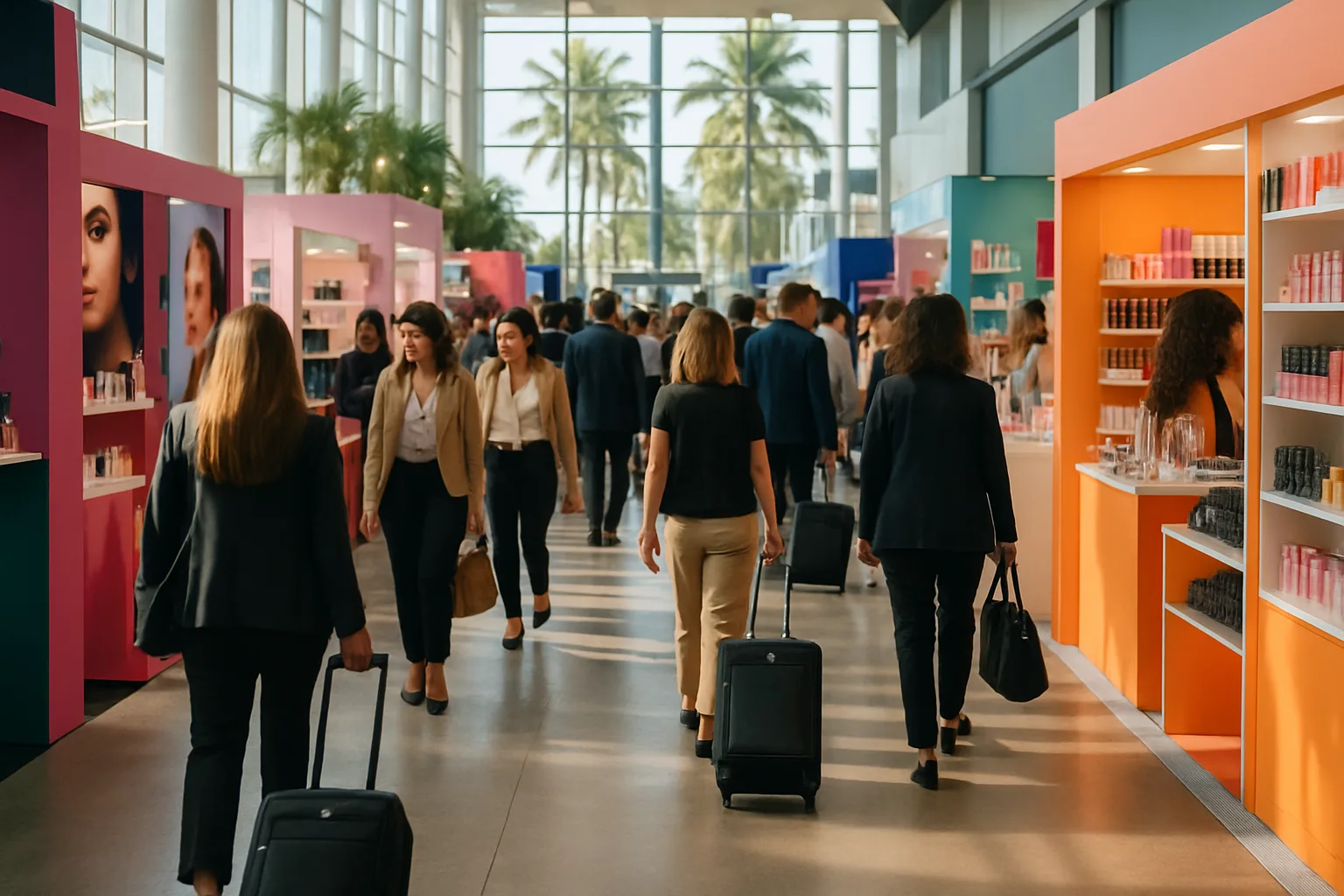
Second editions are where trade shows live or die. A launch year runs on novelty and organizer subsidy; the second year is when exhibitors vote with their budgets. Cosmoprof North America Miami held its second edition January 21 to 23 at the Miami Beach Convention Center, and the vote came back clear: around 900 exhibitors from 49 countries took floor space, a 28% jump over the inaugural year, with attendance holding at roughly 19,000 visits from an extraordinary 115 countries.
That country count deserves a pause. Las Vegas in July draws its 26,000 visits from about a hundred countries; Miami is matching that international spread with a smaller show in its second year. The reason is geography doing exactly what the organizers bet it would.
The hemisphere show
Miami's pitch was never "a second Las Vegas." It was a winter meeting point where North American retail, Latin American distribution, and European and Asian suppliers can all reach each other in one trip. The floor this year read accordingly: Brazilian hair care with genuine technical depth, fragrance across every tier, Caribbean and Central American distributors working the aisles in numbers no US show has drawn before, and European indie brands using Miami as their first American landing.
For a European reporter, the most striking thing was how different the buyer conversations sounded from the ones in Bologna or Las Vegas. Less category-management vocabulary, more distribution mechanics: who clears customs where, who holds inventory, which distributor actually reaches the pharmacy channel in Bogotá or Santiago. It is an older style of beauty commerce, and it is the one most global coverage misses entirely.
January is a strategic date
The calendar position is the show's quiet weapon. Holiday sell-through data lands in mid-January; Bologna, the industry's global mega-gathering, is not until late March. A January show lets a buyer react to Q4 reality and pre-empt the Bologna agenda in the same week. Several exhibitors told the same story in different words: Miami is where they test what the Americas will want before committing their Bologna launches.
What grew, specifically
The 28% exhibitor growth was not evenly spread. The gains skewed toward exactly the segments a hemisphere-gateway show should attract: international pavilions, fragrance houses, and professional and salon suppliers chasing the Latin channel. The finished-goods indie floor grew too, fed by brands that found Las Vegas too big or too late in the year for their launch calendars.
If there is a caution in the numbers, it is that visits held flat while exhibitors surged. A trade show can outgrow its buyer base, and the organizers' job for the third edition is to grow the audience into the floor they have sold. The tools are already visible, including a pre-arranged buyer-meeting program that the Cosmoprof network keeps refining across its shows.
Why it matters
The beauty trade calendar has been remarkably stable for decades: Bologna in spring, Las Vegas in summer, Asia in the autumn. A new fixture earning its place is rare, and it changes behavior upstream, in when brands time their launches and when retailers commit their planograms. Two editions in, Miami looks like it is earning the slot. We will be watching whether the third edition confirms it.