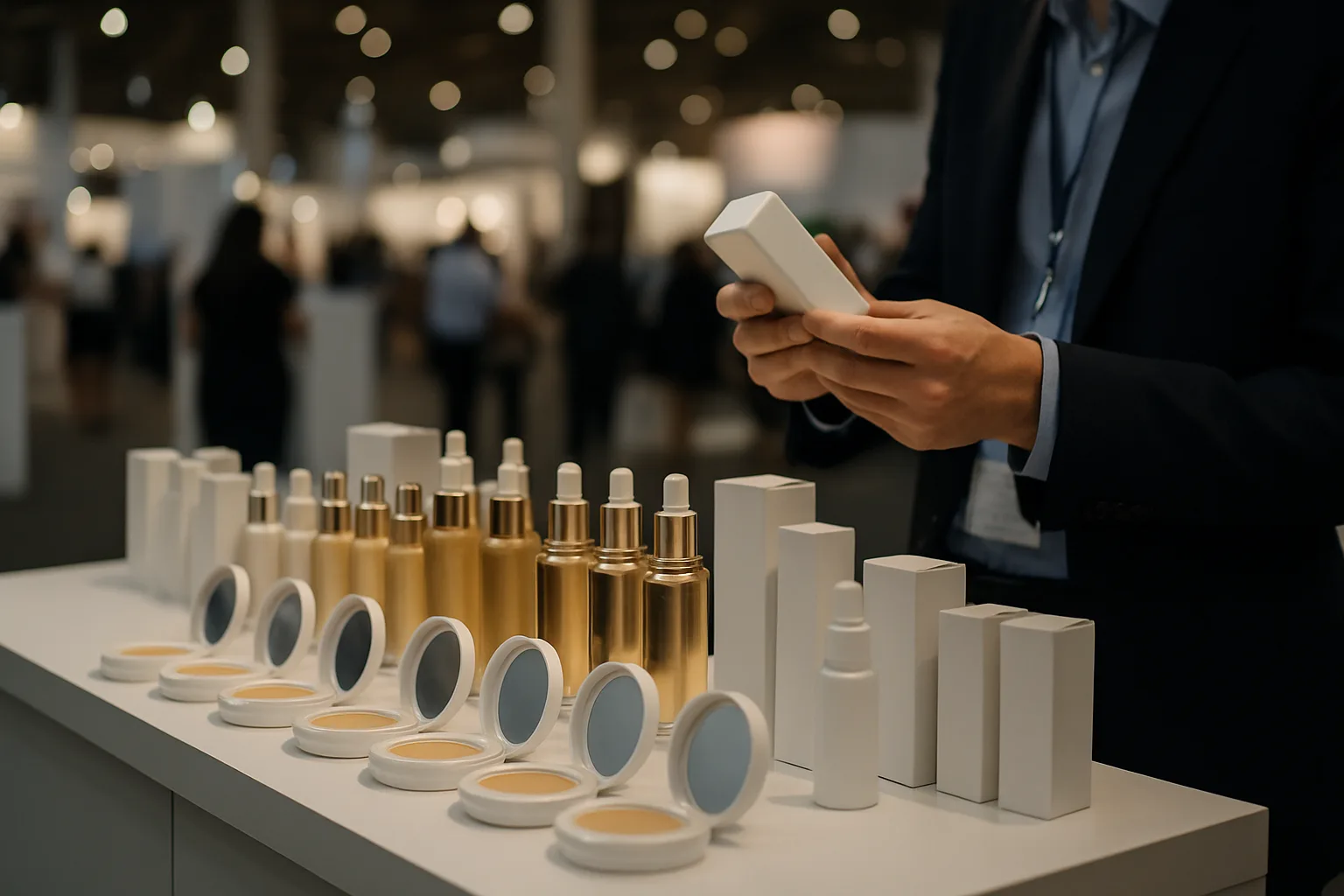
Cosmoprof North America closed its 22nd edition at the Mandalay Bay Convention Center in Las Vegas this week with the numbers of a healthy trade show: more than 26,000 attendee visits from 103 countries and over 1,000 exhibitors from 44 countries, with buyers from L'Oréal, Nordstrom, Revlon, and Target working the aisles. But the two signals worth keeping from the week were not on any banner.
Signal one: the Korean wave is now infrastructure
Korean participation on the floor grew 51% year over year. That is not a trend, that is a structural shift in where the American beauty shelf gets invented.
It showed up in the hardware as much as the booth count. When the Cosmoprof and Cosmopack North America Awards were handed out, Korean companies took four of the six categories: Aekyung Industrial in makeup for its cushion-style essence pact, Nanobiosystem in skin and body for invisible skin-healing patches, iCure Pharm & Cosmetics in formulation for a vegan PDRN serum built on thirteen types of hyaluronic acid, and Shinkwang M&P in packaging for a gas-free airless mist bottle. The Italian and American winners, N&B's prebiotic serum in green and organic and Amaxy's clear gel dry shampoo in hair, were strong, but the sweep tells the story: the supply chain that used to feed Seoul's beauty market now feeds everyone's.
The CosmoTrends report, curated by BEAUTYSTREAMS, read like a K-beauty syllabus translated for Western buyers: sensitive and reactive skin as a permanent category rather than a niche, PDRN regenerative formulas moving from clinic vocabulary to shelf vocabulary, advanced mask technology, device-plus-formula combinations, and a serious run at advanced lip care.
Signal two: the tariff cloud
The other conversation on the floor was quieter and more anxious. International exhibitors spent the week openly worrying about proposed US tariff hikes and what they would do to beauty's intricately global supply chains. A serum formulated in Seoul, filled in Italy, packaged with Korean components, and sold in Ohio is exactly the kind of product a tariff regime turns into an accounting problem.
For a B2B show whose entire function is matching international suppliers with American distribution, that uncertainty lands directly on the purchase orders. Several conversations we tracked ended the same way: buyers still buying, but shortening their commitments and asking who else can make the same thing closer to home. If that instinct hardens, the private-label and contract-manufacturing halls of Cosmopack will feel it before the brand floor does.
The channel keeps reorganizing
Beyond the two headlines, the show confirmed the channel shift this publication has been tracking all year. The buyer mix keeps tilting toward specialty, mass, and distributor networks, away from the department-store beauty hall that used to be the category's front door. The education program, from the Entrepreneur Academy to standing-room CosmoTalks sessions on supply chain and Gen Alpha engagement, was pitched at exactly that new middle: small brands trying to get from a viral moment to a real distribution deal without dying of working capital on the way.
What to watch
Cosmoprof North America returns to Mandalay Bay next July 13 to 15, on a new Monday-to-Wednesday pattern. Between now and then, watch two lines: whether Korean exhibitor growth holds its pace once the novelty premium fades, and whether the tariff conversation stays a conversation. The first will decide what the American shelf looks like in 2027. The second will decide what it costs.