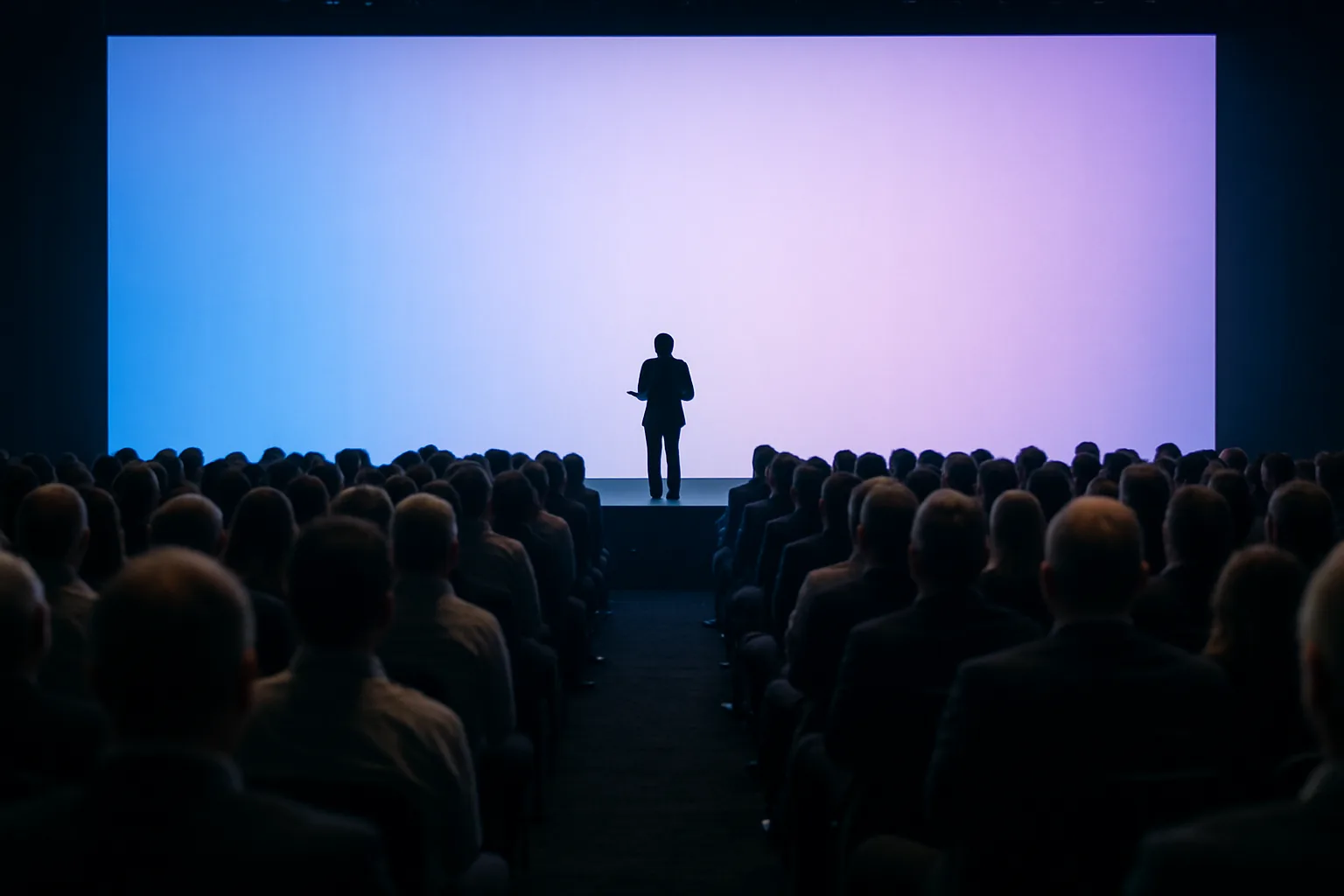
On the Tuesday morning of Shoptalk Europe in Barcelona, Nadine Graf walked onto the Headliner Stage with a 20-minute slot and one of the harder briefs in beauty: explain how The Estée Lauder Companies, a house built on department-store counters and generational brand equity, intends to keep up with a consumer who now moves faster than any of its planning cycles.
Her session was titled "Winning at the Speed of the Consumer," and Graf, who runs Europe, UK & Ireland and Emerging Markets for the group, a remit covering 16 affiliates and more than 80 countries, did not spend it defending the old model.
"Beauty is changing at the speed of light," she told the room, before correcting her own metaphor. The speed that matters, she said, is the speed of the consumer.
Transparency ends the information asymmetry
The most quotable line of the session was also the most structurally important one: "Transparency is everything."
What Graf described is the collapse of the information asymmetry that prestige beauty was built on. A shopper with an AI assistant can now compare product, ingredient list, claim, and price in a single view, across every tier of the market at once. The counter consultation, the glossy campaign, the exclusivity of the department-store hall, none of it survives contact with a consumer who can see the whole shelf, every shelf, in one query.
For a group whose portfolio spans Estée Lauder, Clinique, MAC, and Bobbi Brown, that cuts both ways. Prestige formulas genuinely differ from their mass-market shadows, and transparency rewards that. But the premium that came from the consumer simply not knowing is gone.
Relevance has a shelf life
Graf's second theme was time. "Relevance has a short shelf life," she said. "If you are not there when it matters, the train has left the station."
That is an uncomfortable sentence for a company whose product development and campaign cycles have historically run in years. The trend cycle in beauty now runs in weeks, set on social platforms, accelerated by dupes, and arbitrated by algorithms. Graf's argument was that the group's answer is not to chase every trend but to compress the distance between noticing and shipping, which is an operations problem more than a marketing one.
It tracks with the numbers behind her appearance. The group's "Beauty Reimagined" transformation was reported going into the event to be gaining real traction, with organic revenue up and margins improving for the first time in four years. The stage message and the P&L, for once, were telling the same story.
Culture, commerce, and the seamless middle
Her closing formulation was the one that stayed with us: "Bringing the consumer and the culture and the commerce together in a seamless way is, for me, what will differentiate the winners from the rest."
It sounds like a slogan until you map it against what beauty retail actually looks like in 2026. Culture is where demand is created, on platforms the brands do not control. Commerce is increasingly agentic, mediated by assistants that compare and decide. The seam between them, the moment a cultural impulse becomes a transaction, is the contested ground. Graf's bet is that the houses who own that seam win, and that trust is the toll they get to charge.
She put it another way in Barcelona, in a line that could serve as a thesis for legacy beauty as a whole: trust, while built through generations, must be created again and again.
Why it matters
Shoptalk Europe drew more than 4,500 senior retail and technology leaders to the Fira Gran Via this year, and the agenda was saturated with agentic commerce. What made Graf's twenty minutes stand out was hearing the argument from inside a prestige house rather than from a platform selling the picks and shovels. The speed of the consumer is not a slide, it is a constraint, and the companies built for a slower era now have to re-earn, in Graf's words, again and again, what they used to inherit.