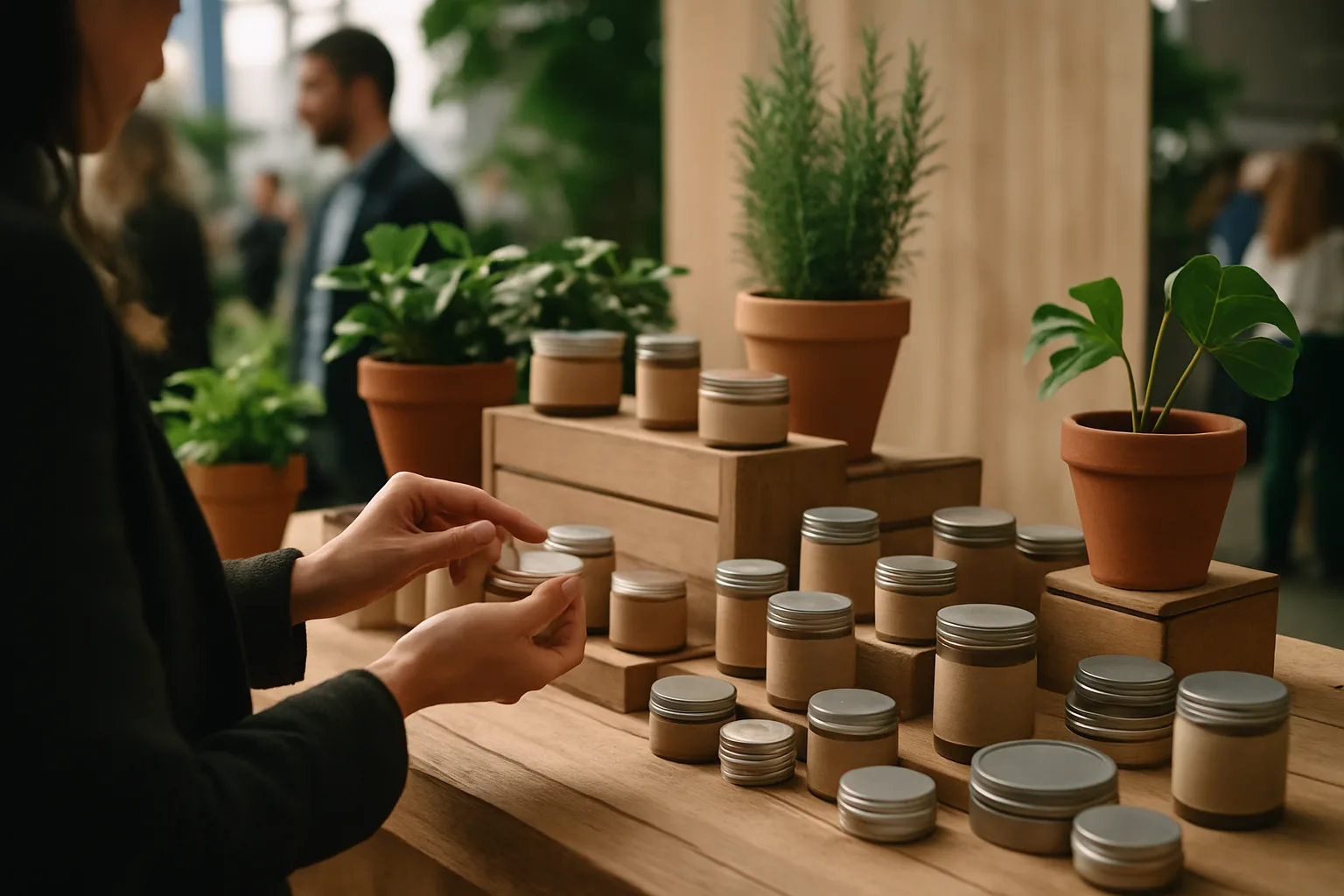
Natural Products Expo West is nominally a food show. Its 45th edition, March 3 to 6 at the Anaheim Convention Center, drew more than 3,000 exhibitors and on the order of 60,000 attendees, with Whole Foods, Costco, Kroger, Sprouts, and Amazon buyers working the floor. But for a decade the show's Beauty and Wellness Pavilion has been the best early-warning system in American personal care, because the ingredient politics that start in the natural channel end up at Ulta and Target three years later.
From "free of" to "does something"
The clearest shift this year was rhetorical, and rhetoric is strategy in this category. Clean beauty's first decade was built on absence: free of parabens, sulfates, fragrance, guilt. The 2026 floor sold presence instead. Microbiome-friendly skincare, haircare, and oral care were everywhere, pitched on what living systems they support rather than what chemicals they omit. The trendspotting from the show's own organizers flagged clean personal care "growing strong" and widening its audience, reaching teens, men, and shoppers of color, which is what happens when a category stops being a boutique ideology and becomes a default expectation.
The NEXTY Awards made the same point from the podium. Out of roughly a thousand entries across thirty-seven categories, the beauty and skincare prize went to ACURE's Sun Serum Drops SPF 30, a product that is simultaneously a serum, a sunscreen, and a "skinimalism" argument: fewer steps, more functions per bottle. Badger's mineral face sunscreen and The Unscented Co.'s lotion bar took adjacent personal-care honors, all three of them products whose pitch is competence, not purity.
Beauty dissolves into wellness
The show's other structural signal was categorical. The organizers themselves flagged "cross-category beauty," beauty expanding into sleep, stress, and wellness, with supplements blending into cosmetics. On the floor that looked like ingestible skincare next to topical formulas from the same brand, adaptogens shared between a beverage line and a serum line, and beauty claims migrating onto products that live nowhere near the beauty aisle.
Retailers should read that as a merchandising problem arriving on schedule. If the same consumer need, calmer skin, better sleep, less visible stress, can be answered by a drink, a capsule, or a cream, the planogram that separates them is a legacy artifact. The retailers that figure out need-state merchandising before the category dissolves entirely will own the transition.
And, inevitably, the floor had its fringe: tallow-based skincare brands showed up in numbers, ancestral-diet logic applied to the face. Most of it will not survive contact with a dermatologist, but the natural channel's fringe has a better forecasting record than its center, and the underlying signal, protein-and-fat-based simplicity as a reaction against fifteen-step routines, rhymes with skinimalism's rise elsewhere on the floor.
Why it matters
Expo West is where American mass retail goes to see what its shoppers will demand in three years. What it saw in beauty this year: microbiome as the new moisturizing, SPF hybrids as the new category center, wellness and beauty as one budget rather than two, and clean as table stakes rather than positioning. For the prestige industry, the warning is familiar. The natural channel commoditized "clean" once already. It is now doing the same to "functional," and the price gap it exposes is where private label walks in.