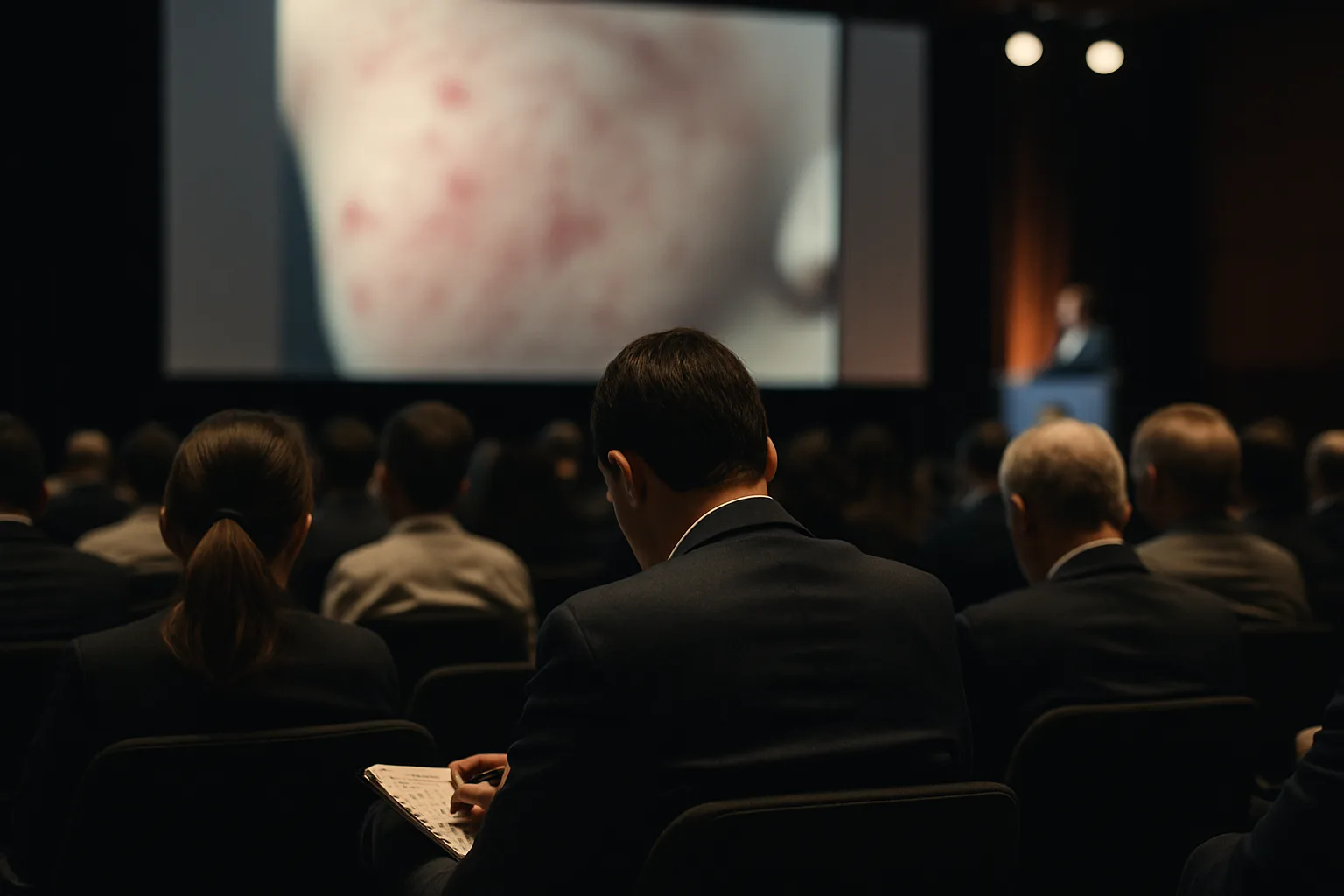
IMCAS World Congress is not a beauty trade show. It is aesthetic medicine's flagship scientific gathering, three days at the Palais des Congrès de Paris, January 29 to 31 this year, with organizer figures counting around 20,000 attendees, a thousand speakers, 370 exhibitors, and over 300 hours of sessions and live demonstrations. Retail to See covers it anyway, for a simple reason: the language invented at IMCAS reliably becomes beauty-aisle marketing about eighteen months later. Retinol, hyaluronic acid, peptides, exosomes, "skin barrier," every one of them made the trip from congress podium to drugstore shelf.
From filling to rebuilding
The through line of the 2026 program was the shift from volume replacement to tissue quality. The injectables conversation is moving away from "fill the line" toward regenerative approaches: exosomes, growth factors, biostimulators treated as default collagen-induction tools rather than exotic options, and polynucleotides repositioned beyond skin boosting toward pigmentation, rosacea, and barrier dysfunction.
Translated out of clinic language: aesthetic medicine is converging on the same story the consumer skincare industry is telling, that the goal is not to disguise aging but to change the tissue's behavior. When Cosmoprof Bologna's trend report leads with NAD+ and telomere ingredients two months from now, it will be speaking dialect IMCAS wrote.
The master-class program made the convergence explicit, linking exosomes, epigenetics, the microbiome, longevity pathways, and nutraceuticals in single sessions. The clinic and the supplement aisle and the serum shelf are becoming one continuous market with three price tiers.
The industry brought real news
This was also a news congress. Allergan Aesthetics arrived with nine e-posters, including four presenting pooled Phase 3 data on TrenibotulinumtoxinE, a first-in-class serotype E botulinum toxin under regulatory review, with a rapid-onset, short-duration profile that would create an entirely new consumer proposition: a trial-size wrinkle treatment. Galderma showcased the science behind the industry's broadest injectable portfolio, and IBSA pressed its regenerative-medicine positioning.
A short-duration toxin deserves beauty retail's attention specifically. The category's biggest conversion barrier has always been commitment fear. A product that wears off in weeks rather than months is, functionally, sampling, and sampling is a retail concept, not a medical one.
AI reaches the treatment room
The congress's other saturation theme was artificial intelligence, in treatment planning, imaging, documentation, and patient communication. The aesthetics patient journey is acquiring the same algorithmic layer the beauty consumer journey already has, and the two will meet: the consumer who gets an AI skin diagnosis at a retail counter and an AI treatment plan at a clinic is one person having one conversation about her face, with two industries listening.
Why it matters
Beauty retail treats aesthetic medicine as an adjacent industry. The IMCAS agenda says it is upstream, the R&D lab where the category's claims, ingredients, and now its data practices get invented before they are simplified for the shelf. The regenerative turn, the longevity framing, and the arrival of short-duration injectables will all shape what prestige skincare says and sells into 2027. The congress returns to Paris January 28 to 30 next year. We will keep reading the agenda so the shelf makes sense on arrival.