The numbers PLMA published around its 39th World of Private Label show, held May 19 and 20 at the RAI in Amsterdam, describe a machine that has stopped apologizing. Private label now holds a 38.8% value share across seventeen European countries tracked by NielsenIQ, worth more than €387 billion, up €15.3 billion in a year. Share rose in twelve of the seventeen markets. Switzerland runs above 52%, the first market where own brands outsell brands outright. Spain added 1.1 points in a single year.
More than 3,200 exhibitors from over 75 countries filled the halls, organized into seventy-plus national and regional pavilions, with Brazil, Egypt, Poland, South Korea, and Vietnam mounting pavilions for the first time. Those last two debuts are the detail worth pausing on, because Korea and Brazil are not food stories. They are beauty manufacturing powers, and their arrival at the world's biggest private-label fair is not an accident.
Beauty is the margin frontier
Food built European private label, and food is where its share is deepest. But the growth math is pushing retailers toward the non-food halls, where cosmetics, health and beauty sit. Beauty private label carries the two things a retailer's own-brand program wants most: gross margins far above grocery, and a consumer who has been trained by a decade of "dupe" culture to believe that formulas converge and branding is the expensive part.
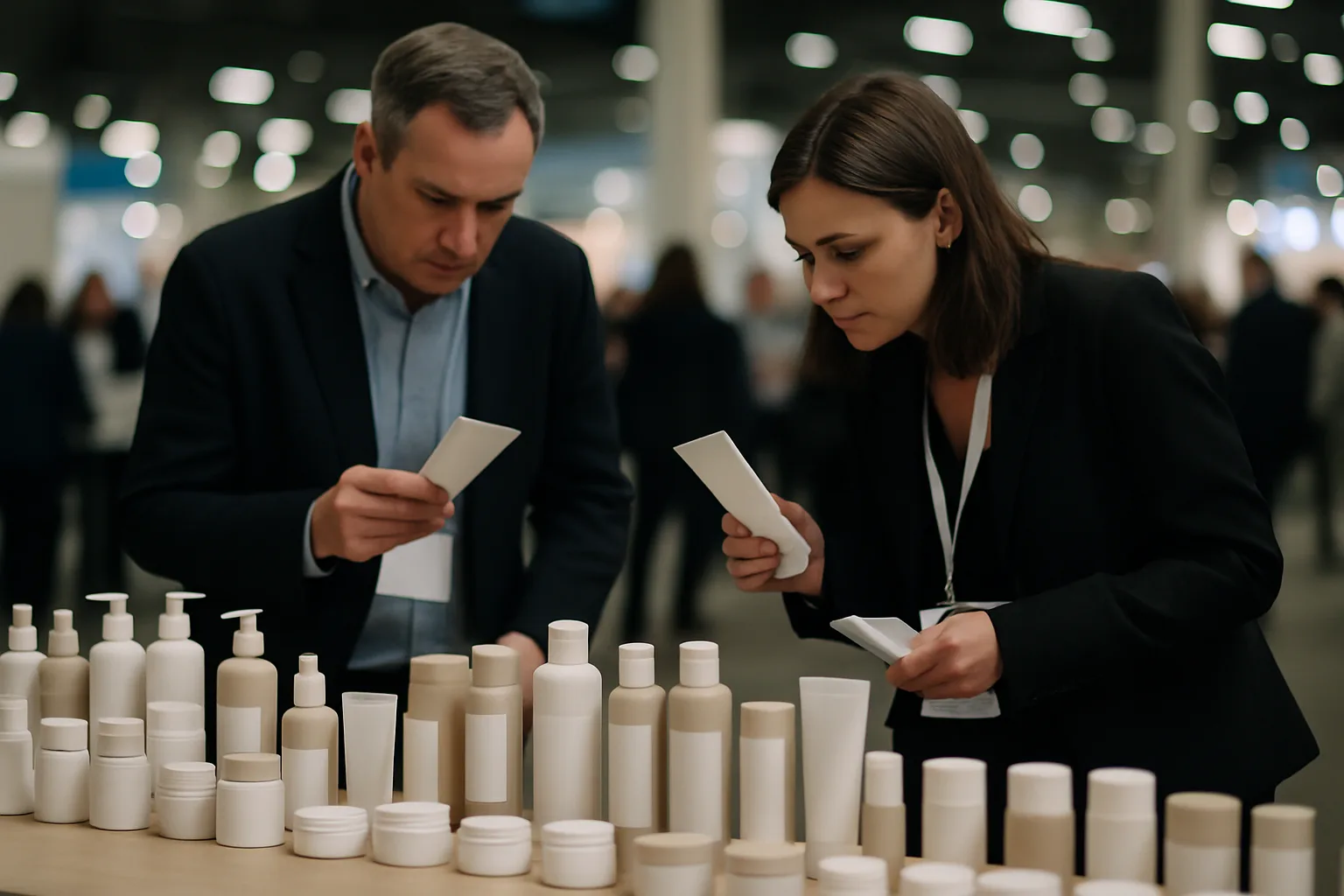
That consumer belief happens to be substantially true, and the supply side at PLMA is the proof. The same contract manufacturers who fill prestige bottles will fill a retailer's bottle, and shows like this one are where those conversations start. A Korean pavilion at PLMA means Korean formulation credibility, the most fashionable in the world right now, is available to any European grocery chain willing to write a purchase order.
The drugstore chains already proved it
None of this is hypothetical. Germany's drugstore chains have been running the experiment for years, and their own-brand beauty lines routinely outsell the brands they shelve next to. What PLMA 2026 signaled is that the model is going continental: the retailers walking the beauty aisles of the RAI were not just discounters hunting cheap SKUs, but mainstream chains building tiered own-brand architectures, entry price, mid-tier, and increasingly a "masstige" layer with clinical-adjacent claims and packaging that quotes prestige codes.
The show's Supermarket of Ideas trend hub, relocated and redesigned this year, gave the direction away: the innovation on display kept borrowing beauty's vocabulary, personalization, wellness crossover, sustainability-as-default.
Why it matters
For brand-side beauty, the European private-label share curve is the scariest chart in the industry, because it shows what happens when retailers stop renting shelf space to brands and start competing with them on it. The 38.8% figure is an average across categories; beauty's own-brand share is still far lower, which is exactly why the growth ambition is pointed at it. The gap between what a prestige serum costs to make and what it sells for has been the industry's business model for a century. PLMA is the annual reminder that Europe's retailers have noticed, and this year they brought Seoul and São Paulo with them.