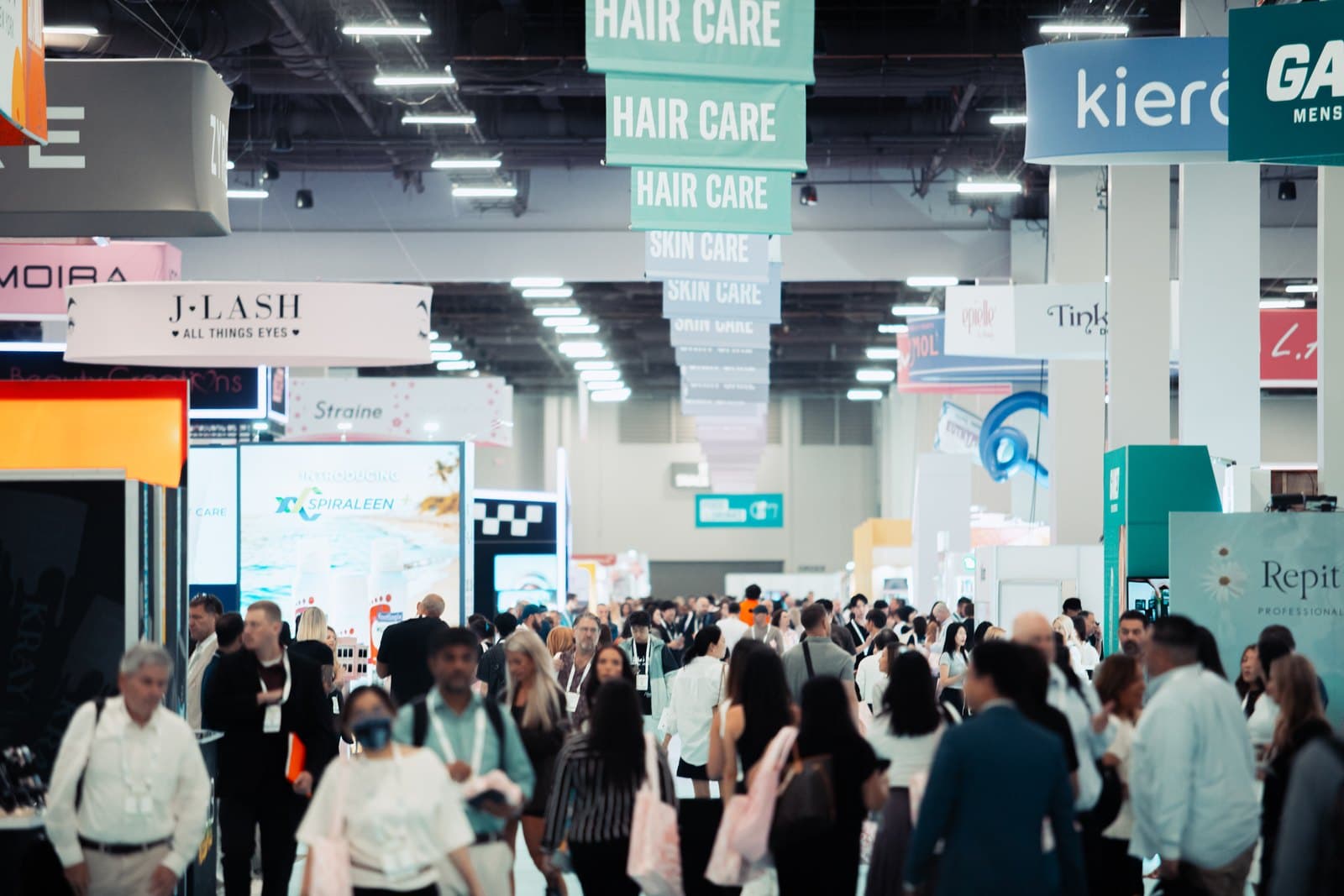
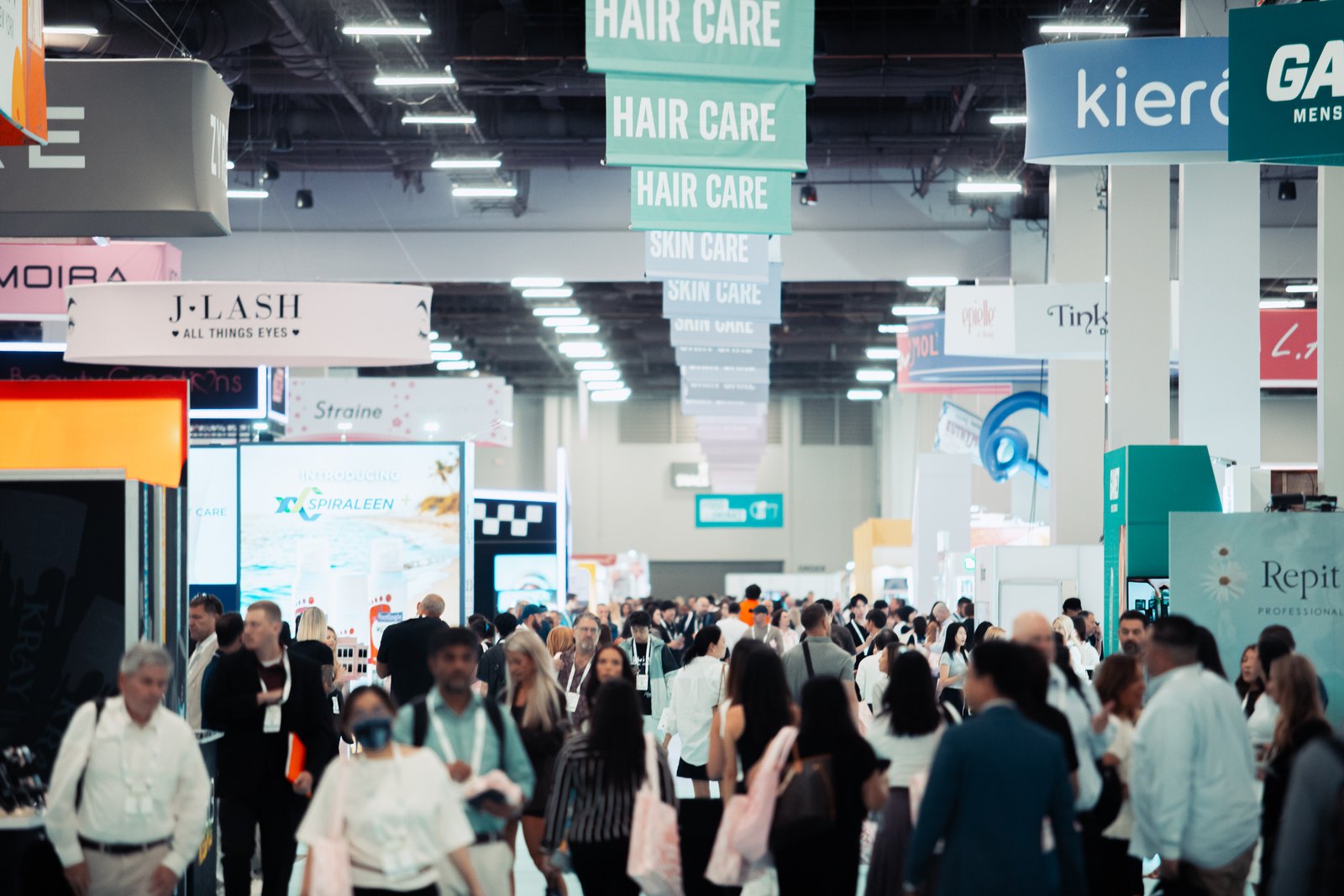
LAS VEGAS. Walk the main hall at Cosmoprof North America and the overhead signage tells you how the industry still thinks: HAIR CARE hangs over one run of aisles, SKIN CARE over the next. The third trend in this year's CosmoTrends report exists precisely in the gap between those two banners, and it is the one with the clearest commercial runway.
Scalp Zoning, subtitled spotlighting the scalp, describes a category that the report values at 15.81 billion dollars in 2026, forecast to reach 25.88 billion by 2033 at a compound annual rate of 7.3 percent, citing Coherent Market Insights. Those are not niche numbers. That is a category growing faster than most of the halls around it.
The demand driver in the footnote
The report names three forces behind the growth. Two are familiar: consumers understanding that scalp condition determines hair quality, and formulas leaning into sensoriality, with brands positioning scalp care as a spa-like experience.
The third is the one worth stopping on. CosmoTrends cites Wall Street Journal reporting that GLP-1 use is driving scalp care demand, because the appetite suppression that makes those drugs work can also cause hair loss.
That is a structurally different kind of demand. It is not aspirational, it is remedial, it arrives on a medical timeline rather than a seasonal one, and it brings a consumer who is already spending on a prescription and is therefore not especially price sensitive about an adjacent product. Any beauty category that finds itself downstream of a pharmaceutical adoption curve is going to grow whether or not its marketing is any good.
What the formulations are actually doing
The products chosen for the showcase treat the scalp as skin, which is the whole trend in one sentence.
ExoCoBio's ASCEplus brought a daily scalp mist built on exosome technology, specifically the company's rose stem cell derived extracellular vesicles, combined with niacinamide, biotin and copper tripeptide-1. That is a skincare ingredient list applied above the hairline, in a format designed for daily home use rather than a clinic.
HUFS, from Norway, brought a conditioner. SONIMEDI, from South Korea, a shampoo built around pore clearing, which is a skincare verb applied to the scalp. K-Headspa, from the United States, a scalp cooling serum, which is where the sensorial argument becomes the product: cooling delivers no measurable benefit to a follicle, but it delivers an unmistakable sensation of something working, and it is the reason the Japanese head spa format has travelled.
The ingredient cast the report lists for the category, exosomes, cooling actives, peptides and niacinamide, is a skincare cast. Nobody is formulating scalp care out of hair care ingredients any more.
The merchandising problem
Here is where the category is stuck, and it is a retail problem rather than a formulation one.
A scalp serum bought as skincare should sit in the skincare aisle, priced against a face serum, and it will support that price. Put it in the hair aisle and it gets compared with a shampoo, where the price anchor is several times lower and the shopper is in a replenishment mindset rather than a treatment one. The same product earns a completely different margin depending on which overhead sign it sits under.
Most retailers still solve this by defaulting to hair care, because that is where the buying team sits. That is an org chart decision, not a shopper decision, and it is quietly capping the category. The specialty retailers and the head spa formats moving into North American cities are not making the same mistake, which is why the interesting scalp launches keep going to them first.
What to watch
Three things. Whether a major chain builds a dedicated scalp bay rather than a shelf strip, which is the moment the category stops being an extension of shampoo. Whether the exosome language survives regulatory attention, because it is being used for very different materials by very different suppliers. And whether the GLP-1 driven demand shows up in reorder data, because remedial demand is far stickier than trend demand, and it will be visible in repeat rate before it is visible in any trend report.
Read our full report from the show: Cosmoprof North America 2026, where the beauty trade stopped paying for novelty.