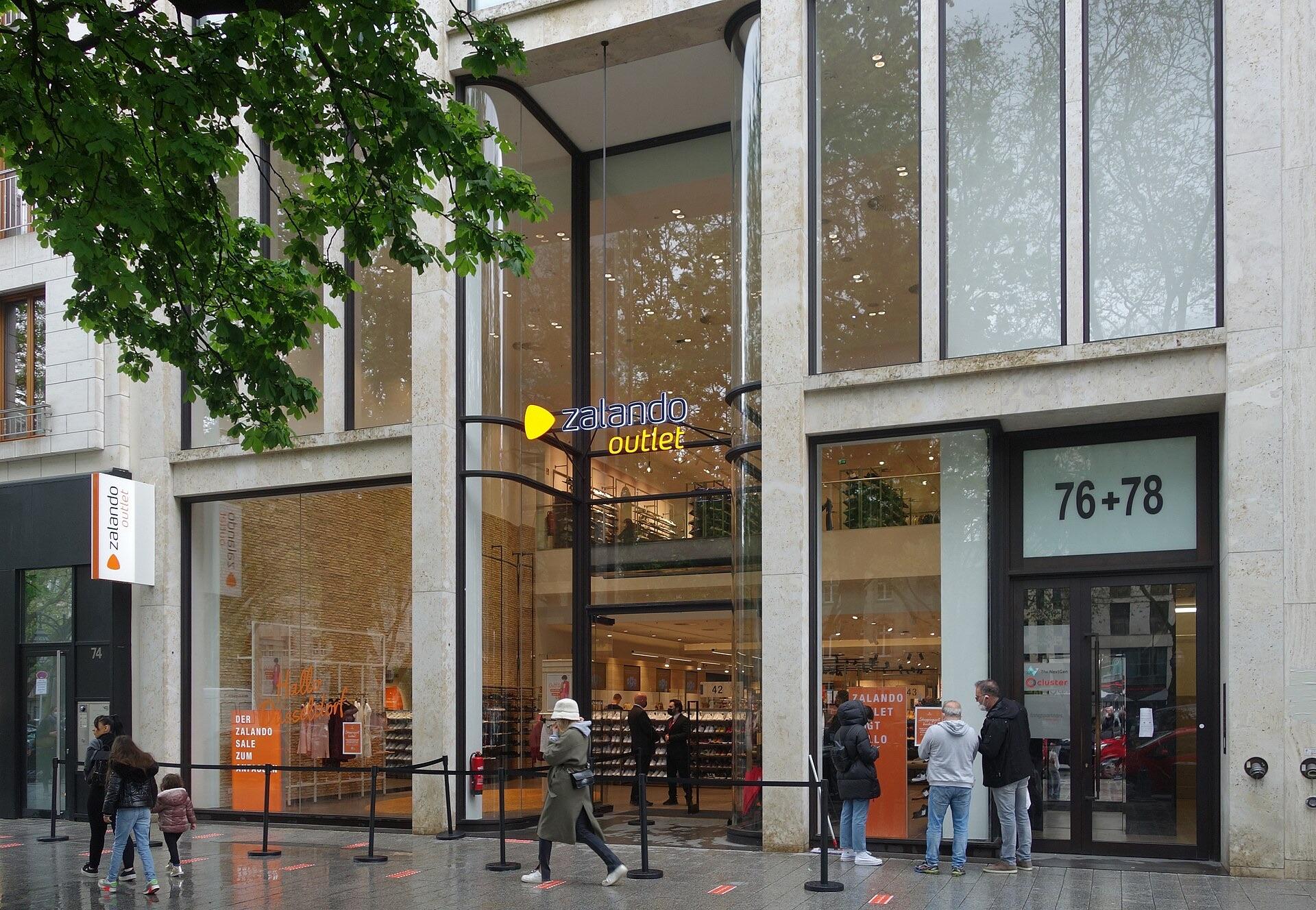
Most of the agentic commerce talk at Web Summit 2026 was about a future in which an AI agent buys on your behalf and the shop never sees you. Zalando came to Lisbon with something less dramatic: an assistant that tells you which size to order. Its chief technology officer, Graeme Smith, took the Commerce Summit stage on the morning of November 12 with a talk whose title crossed out "Surviving" and kept "Thriving in the Age of Agentic Commerce", and the announcement behind it was, essentially, a better size chart.
That is not a criticism. It may be the most honest pitch of the week.
What Zalando actually announced
The company says 22 million people have visited the Zalando Assistant this year, up from just over 2 million in its first two years. The new feature is size advice, built on more than 10,000 mapped size charts across hundreds of sizing systems and combined with each customer's purchase history, returns, body measurements and fit feedback. It covers around 70% of the assortment and, in A/B tests, raised add-to-cart rates by 4%, according to Zalando. The assistant now also takes photo searches, checks the weather, compares products, fills the bag and tracks orders inside the same conversation. Large language models from OpenAI and others handle the dialogue; Zalando's own models handle search, recommendations and fit.
The detail that matters is in the company's own framing: "while general-purpose AI models can recommend products, reliable size advice requires detailed fashion-specific information." Read that as a warning to ChatGPT and Google, and as reassurance to investors. A general agent can find you a black midi dress. It cannot know that you return everything in a 38 from one brand and keep the 36 from another. Zalando can, because it has 18 years of returns behind it.
The numbers that are missing
Here the pitch thins out. Twenty-two million visitors sounds large until you set it against the 63 million active customers Zalando reports across the group. A 4% lift in add-to-cart is real but small, and add-to-cart is the cheapest metric in e-commerce: it measures intention, not revenue. The figure that would justify the whole strategy is the one the company did not publish, which is the effect of size advice on returns.
In fashion, returns are the business model's weak spot. We have argued before that returns still break the economics of direct-to-consumer, and Zalando, which grew up offering free returns across Europe, knows that better than anyone. If size advice cuts return rates by a point or two, it is worth more than any chatbot feature on the roadmap, and Zalando would be shouting about it. Its silence on that number is the most telling part of the release.
Everyone else was selling data and trust
Walk the rest of the agentic floor and the same idea appears from the other side. Spangle AI launched Product Intelligence 360 in Lisbon on November 12: a continuously updated record for each product, combining what it is, how it performs and what customers say, built so that AI assistants can match a shopper's intent to a catalogue, as reported by MarTech Edge. Spangle says it took Express from being bypassed in ChatGPT answers about women's casual pants to being the most cited commerce source for that query, with AI-attributed revenue in September 2026 at 14.5 times the previous 30 days. MarTech Edge rightly notes that this is a before-and-after comparison, not a controlled test, and Spangle does not disclose the base it grew from.
The pitch is the same as Zalando's: generic product data, written for filters and spreadsheets, is useless to an agent that shops by occasion and fit. The difference is that Zalando built that layer over almost two decades, and most brands will now have to rent it.
Sumsub came at the problem from the trust side, presenting an extension of its Know Your Agent framework that sits between an AI agent and the data it touches, filters personal information, and can trigger a liveness check to confirm a real person stands behind a sensitive action, according to the company. It is not a retail product, but it answers the question every retailer should be asking before letting an outside agent into the checkout: who authorised this purchase, and who pays when it goes wrong?
Our verdict
When we looked at agentic commerce a year ago, the fear was that external agents would turn retailers into anonymous warehouses. Lisbon suggests the defence is already visible, and it is not glamorous. It is product data good enough that an agent cannot ignore it, customer data deep enough that an agent cannot replicate it, and rules strict enough that an agent cannot act without permission. Zalando owns the first two. Its Web Summit message was, in effect, that the general agents will need what it knows. That is plausible. It becomes convincing the day Zalando publishes what size advice does to its returns.
Sources: Zalando, "Built for fashion: Zalando showcases its vision for agentic shopping at Web Summit 2026", November 11, 2026; Zalando, "From conversational tool to a lifestyle agent: how the Zalando Assistant has grown up", November 2026; MarTech Edge, "Spangle AI Launches Product Intelligence 360 for AI Shopping", November 2026; Sumsub, "Sumsub Brings Know Your Agent to Web Summit 2026", November 2026, all via the Web Summit press release room.