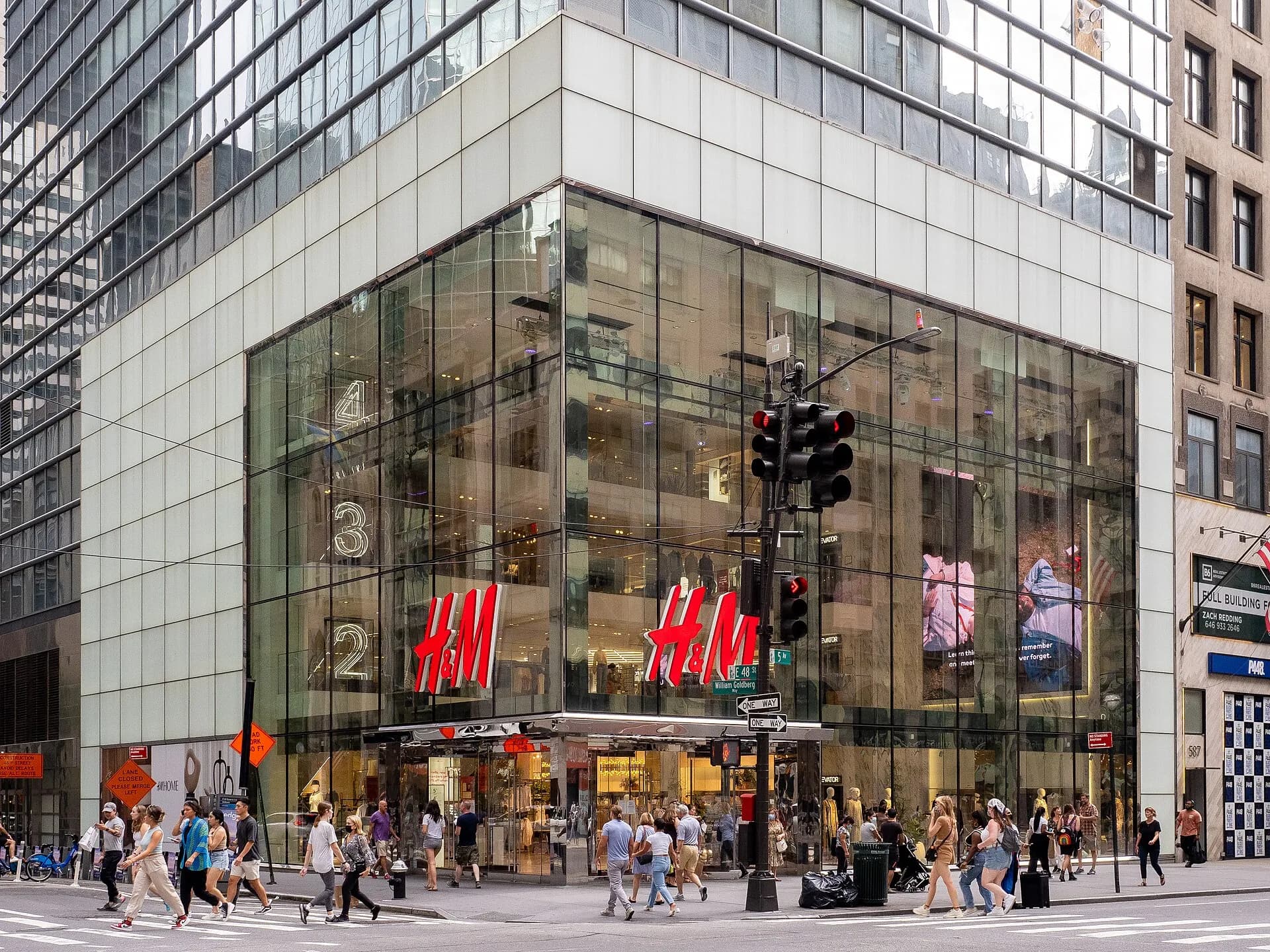
H&M published its nine-month report on Thursday, September 24, covering the third quarter from June to August. On profit, it was a good quarter. On customers, it was the same quarter H&M has been reporting for a while: sales barely moving, and a gap with Zara's owner that keeps widening.
The headline numbers
Net sales reached SEK 57,189 million, against 57,017 million a year earlier, an increase of 1% in local currencies with around 2% fewer stores, according to the company's report. Operating profit rose to SEK 6,037 million from 4,914 million, up 23%, and the operating margin went from 8.6% to 10.6%. Profit after tax was SEK 4,098 million, against 3,212 million.
The profit figure beat expectations. Analysts polled by LSEG had forecast 5.14 billion kronor, as reported by Reuters via RTÉ.
Where the margin came from
The gross margin rose to 54.0% from 52.9%, according to the report. Most of that improvement was not trading. H&M said the quarter's gross margin was lifted by one-time effects of approximately 1.6 percentage points "from tariffs and goods imports that had increased the cost of goods sold in previous quarters," and the same 1.6 points flattered the operating margin. Reuters described it as a one-time reimbursement of US tariffs that H&M indicated would not recur.
Take those 1.6 points out and the operating margin is around 9.0%, against 8.6% a year ago, a Retail to See calculation from the company's disclosed effect. That is still progress, and it comes from the other side of the income statement: selling and administrative expenses fell 1% to SEK 24,832 million. Daniel Ervér, the chief executive, put it plainly in the report: "Our work, especially within purchasing, cost control and more efficient operations, has contributed to a more profitable business."
The underlying trend is real. The rolling twelve-month operating margin stood at 9.0%, against 7.2%, according to the company. But it has been built by spending less per garment sold, not by selling more garments.
The customers are not coming back yet
The regional table shows where sales stalled. Western Europe, H&M's largest region at SEK 19,414 million for the quarter, fell 1% in local currencies, according to the report. The Nordics grew 6% and Asia, Oceania and Africa 4%, while the Americas, Southern Europe and Eastern Europe each added 1%. Ervér attributed part of the Western European weakness to changes in warehouse logistics and said consumers had been "under a lot of pressure for a long time," as reported by Reuters via RTÉ.
September will not change the picture. H&M expects sales for the month to rise 1% in local currencies. Inditex, by contrast, reported first-half sales up 7.6%, or 9.2% in constant currency, and said its sales between August 1 and September 7 grew 9%, according to its release, a gap we discussed in Inditex's first-half results.
In-season buying, Inditex's playbook
The strategic news sits in one line of the CEO's comments: H&M is "gradually increasing the proportion of in-season purchasing, to more quickly meet customers' demand for fashion and quality at the best price," according to the report. Ervér told Reuters that H&M can now take a product "from having a first rough idea to the customer in six weeks," and that the company is sourcing with shorter lead times and from suppliers closer to its main markets, as reported by RTÉ.
This is the model that made Inditex what it is: commit to less in advance, then chase what sells inside the season. We looked at how that machine works in Inside Inditex's real-time machine. The report frames the logic in the same terms: a higher share of purchases in the current season and a more flexible supply chain should allow better availability "even with a lower volume of stock," which would also release working capital.
For now, the stock is going the other way. Stock-in-trade rose to SEK 39,355 million from 37,938 million, up 9% in local currencies and equal to 17.8% of rolling twelve-month sales against 16.4%, according to the report. H&M attributes the increase to more goods in transit, caused by disruption in global supply chains and by temporary effects from consolidating its European logistics network. Stock up 9% against sales up 1% is exactly what in-season buying is meant to fix, and it is the number that will show whether the shift is working.
Fewer stores, better stores
The store portfolio keeps shrinking. H&M had 4,023 stores at the end of August, 95 fewer than a year earlier, with 59 openings and 137 closures in the first nine months, according to the report. The plan for 2026 is around 90 openings and 170 closures. New markets continue at the edges: two first stores in Paraguay in the quarter, Malta and Azerbaijan in the fourth quarter, and Argentina by franchise in 2027. Online accounts for just over 30% of sales.
What to watch
Three things. First, the fourth-quarter margin without the tariff effect: H&M expects markdown costs to rise somewhat as the pre-Black Friday campaign period gets longer, and expects external factors to be somewhat negative for the goods it sells in the quarter. Second, whether stock-in-trade starts falling relative to sales as goods in transit clear and the in-season share grows. Third, Western Europe. Read alongside Next's half-year update, H&M's numbers say the European mid-market can rebuild margin through cost. Customers come back for a reason, and H&M is now betting that the reason is speed.
Sources: H & M Hennes & Mauritz AB, "Nine-month report 2026", September 24, 2026; RTÉ, "H&M promises change as slow sales undermine profit boost", September 24, 2026 (Reuters); FashionNetwork, "H&M Q3 sales and profits grow as it boosts in-season purchasing", September 24, 2026; Inditex, "Interim half-year 2026 results", September 9, 2026. The margin excluding one-time effects is a Retail to See calculation from the company's disclosed 1.6 point effect.

.jpg)